Posted in Archive, march 2024

Health’s Expiration Date: Why Accessibilty Shouldn’t Be An Afterthought

Health is often discussed in a way that would imply it is a given untill old age. It is a mindset that is flawed and dismissive of the many factors that can impact our health at any age. It ignores genetic predispositions, accidents and injuries, age related complications, conditions that develop with unknown causes, complications caused by other illnesses e.g stokes, etc.

It is necessary for there to be a shift away from the idea that health is a given, to one where it has an expiration date. With that viewpoint in mind, I ask why does society remain as inaccessible as it currently is? The majority of us will, at some point in our lives experience a level of disability. Despite this accessibility across the board is not where it needs to be to make life equally accessible for all.

Health expires, so why does accessibility remain an afterthought?

Posted in Archive, march 2024, September

Look Beyond The Wheelchair

The wheelchair often becomes the point of attention when people first meet me. I often get met with “What happened to you?” or “But you’re so young!”. Questions that are meant with no malice I know. Society has ingrained in many the perception that the wheelchair is one of the defining symbols of disability. However, if we were to literally remove my wheelchair from the picture, would you still be able to perceive any indicators of my disability?

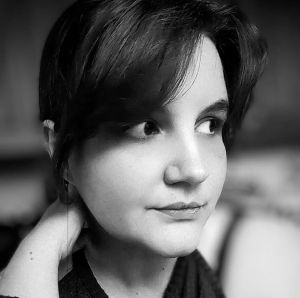
Rebecca, a white woman with her hair tied up, gazes off to the side in a black and white snapshot.

When we remove my wheelchair rather literally from the picture, it becomes almost imposibile to recogize any of my conditions. Their lack of visibility does not however make them any less real. Society, as we have seen repeatedly, tends to validate only those disabilities in which it can ‘prove’ the condition/the condition is visible. This is extremely problematic as only a small percentage of the disabled population are classed as having a ‘visible disability’.

Using myself as an example, I live with organ prolapse, I’m reliant on a suprapubic catheter, I experience extreme levels of chronic pain, I have PTSD, Dyspraxia,  find too much visual stimuli brings on migraines and numerous other conditions that are not immediately obvious. These symptoms can impact  day-to-day functioning, and when combined, they can be truly debilitating. Creating a more accessible world would greatly enhance the lives of those with disabilities. This would involve not only providing wheelchair access but also increasing the availability of disabled-friendly facilities, raising awareness among retail staff about the various challenges customers may face e.g visual, auditory, sensory difficulties etc and working to create an inclusive environment of understanding and patience.

It’s vital to recognize that disability is unique to every individual and illness. It’s a sliding scale in which each person moves in accordance with their changing conditions and the factors that are impacting them that day. It’s a vast scale; we need to refrain from reducing people and their disabilities to simple tickboxs.

Posted in Archive, march 2024, September

‘Traditional Employment Is A Requirement’

Over the past few months, my husband and I have encountered a recurring challenge while searching for a new home: many landlords insist that both of us must be in ‘traditional full-time employment’. This has been quite an obstacle for us. Despite my nearly seven-year career as an author, landlords always seem wary when they learn that I receive PIP, while barely sparing a glance at my husband’s long-term employment history.

With our current landlord asking us to find a new home by the end of March, we’ve found ourselves having many alate-night conversation, trying to figure out a solution. I suggested that I explore alternative job opportunities that were disability friendly.  In the early stages of my career, I used to write only during the night – while not ideal, it’s a balancing act I could manage again if necessary.

However, navigating the job market presented new challenges. While remote work was widely advertised just a few years ago, many companies now require office-based or hybrid roles. For me, a fully remote job is currently necessary due to my reliance on physical assistance to leave my home.

The more we talked about these issues, I kept coming back to the same questions:

What exactly is ‘traditional’?

If our household income meets your requirements, why should my disability or my job title matter?

At the moment, we don’t have a solution. There’s no magic fix. In the meantime, I plan to continue documenting these interactions and hope that we can make progress towards more tolerance and equality in society.

Posted in Archive

International Wheelchair Day 2024

Wheelchairs are often associated with frailty, illness, and vulnerability, but they serve as valuable tools that offer freedom of movement and independence, liberating individuals from limiting circumstances. They are remarkable aids that significantly enhance the lives of those who use them.

Access to an electric wheelchair has had a positive impact on my quality of life. After experiencing frequent dislocations from using a manual chair, the electric wheelchair has allowed me to move around independently and safely, factors which cannot be stressed enough as to their importance.

As technology continues to advance, the future looks promising for wheelchairs, and I am eagerly anticipating the developments to come.

Posted in Archive, February 2024

Discrimination In The Rental Market

In our recent search for an accessible home following being served with a S21 notice and my changing health needs, we have encountered a disappointingly high level of discrimination and prejudice. Finding an accessible property has proven to be a challenging and frustrating process, not because suitable accommodations do not exist, but simply due to the discriminatory attitudes of several estate agents/landlords we have encountered.

In both private and social housing sectors, we have faced barriers. Despite legal protections against discrimination based on disability, we have been told by multiple landlords that they do not accept wheelchair users or those who do not have traditional full-time employment. The scarcity of accessible social housing options only adds to the difficulty of finding a suitable living situation before our S21 expires.

What has become abundantly clear throughout this process is that the real obstacle we face is not my health or disability, but society’s unwillingness to make simple accommodations for individuals with disabilities. Accessible housing should not be considered to be a luxury but a basic necessity. Yet we find ourselves constantly met with obstacles and roadblocks. While there may be laws in place to protect against discrimination, they seem like empty gestures in the face of the everyday reality.

It is time for society to prioritize accessibility and inclusivity in housing and other areas to ensure that individuals with disabilities are able to live independently and with dignity. The current state of affairs is unacceptable, and it is up to all of us to work towards a more inclusive and accessible society for everyone.

Posted in Archive, February 2024

Accessible Housing In the UK

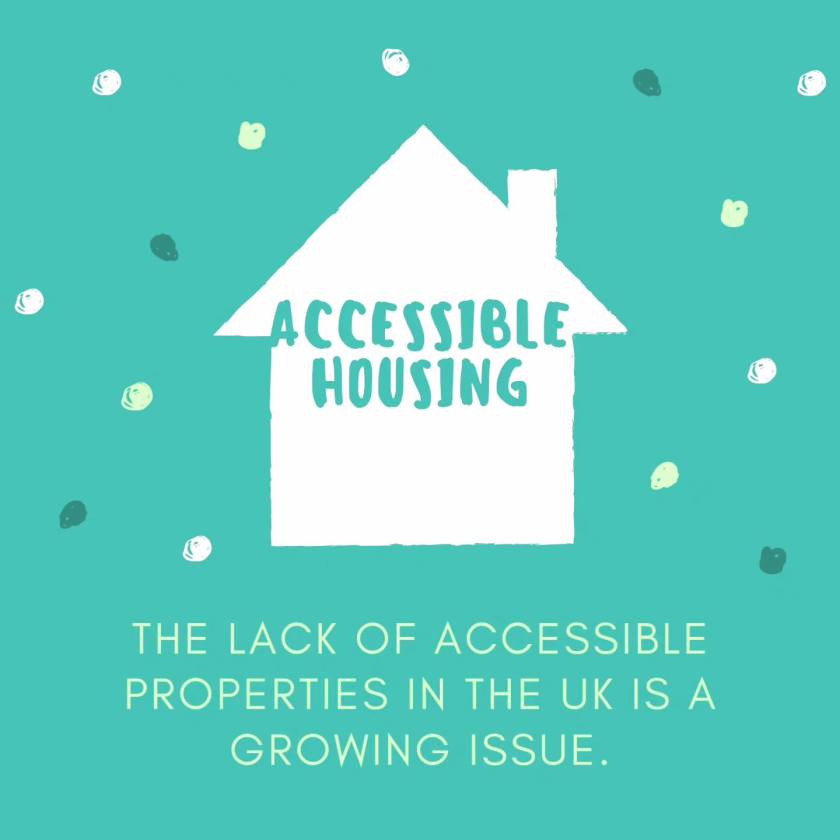
The distinct lack of accessible housing for disabled people in the UK is a glaring issue that is often overlooked. Despite progress in making buildings more inclusive, many disabled individuals/families, such as myself, still face significant barriers when searching for suitable housing in both the private and social sectors. Data published by the government in 2020 highlighted that only 9% of homes in the UK have key accessibility features (Association, June 2020). It is estimated that over 400,000 wheelchair users are left living in properties that are neither adaptable or accessible (Association, June 2020). In the area I currently live, a town based in Merseyside, it has been three years since a fully accessible family home last became available (information provided to me by occupational therapy), and to rent a bungalow it is nearly 3x our currently monthly rent.

One of the main challenges we are confronted with is the limited availability of accessible housing options. Many properties are not designed with wheelchair users or those with mobility impairments in mind, making it difficult for them to move around freely and independently in their own homes. This is an area that I struggle with every day. I can no longer share a bed with my husband as I cannot access our bedroom and have no alternative but to sleep in the living room. The kitchen and bathroom present their own complications, to attempt to access them results in damaging the door frames, there is no turning space, and I rely on others to help me to perform basic everyday tasks. This loss of independence takes a signficant mental toll.

Often disabled individuals and their families are forced to agree to a property that does not meet the requirements needed to be accessible, with the view that they then spend tens of thousands of pounds on making the necessary modifications e.g.installing a lift, creating front and back ramped access, widening door frames, creating level access bathrooms, lowering kitchen appliances etc. The cost of these adaptations very quickly add up, and while there is some funding available , the mounting costs often put creating an accessible home out of reach.

Even when accessible options are available, they are often in short supply, leading to long waiting lists and too high a demand for these properties. This lack of accessible properties in both the social and private sectors creates an ever-growing mountain of disabled people/families being stuck in unsuitable living conditions, and unable to find a home that meets their needs. This impacts multiple elements of the individual’s quality of life, their employment capabilities and limits social interaction. Personally, I see this in my day-to-day life. I am unable to leave my house without physical assistance and often now only leave at weekends when the family can help, I have had to relinquish volunteering roles as I cannot physically attend, our living room doubles as my bedroom which leaves privacy very much wanting, and not having access to an adaptive bathroom is a nightmare.

The chronic lack of accessible housing throughout the UK desperately needs to be addressed. Accessible housing simply cannot be viewed as optional. It’s a necessity to ensure that all those who require it are enabled to live full lives, be able to access equal opportunities and live as independently as possible.

Posted in Archive, October 2023

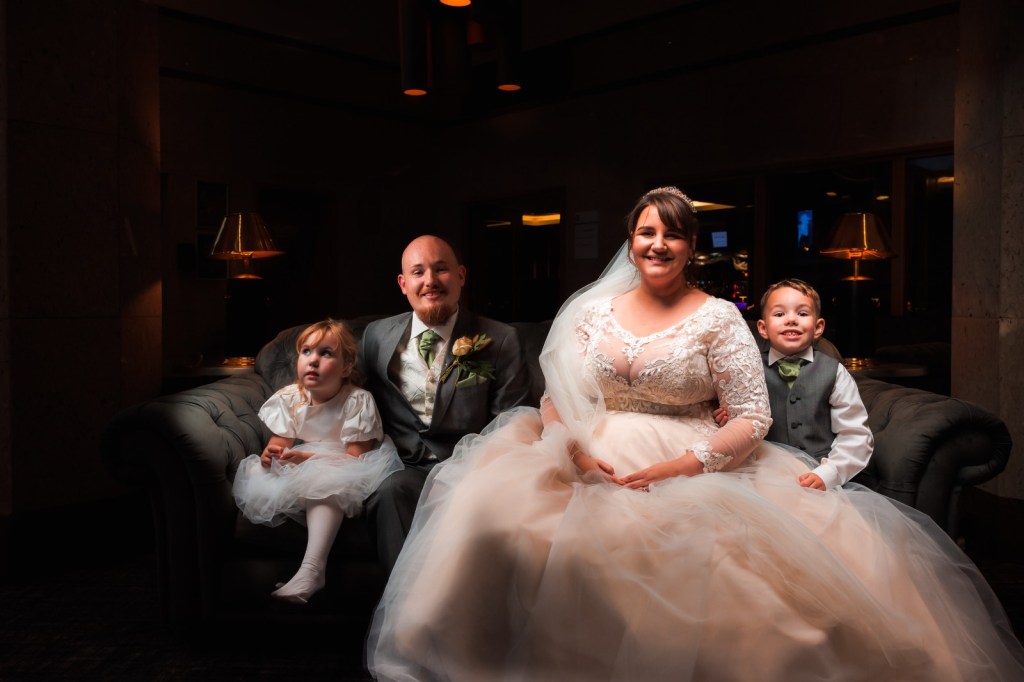
Just Married

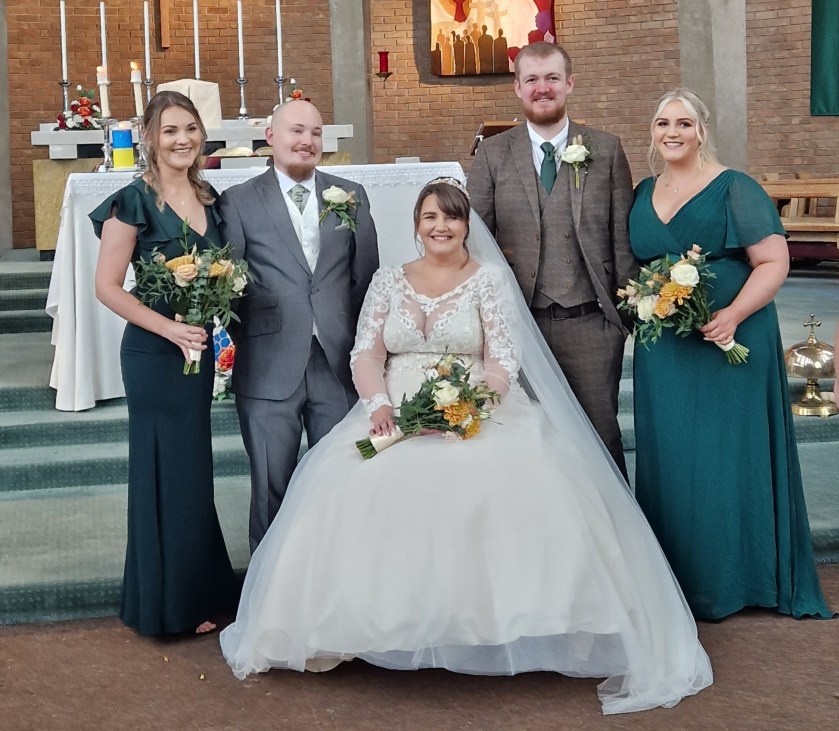
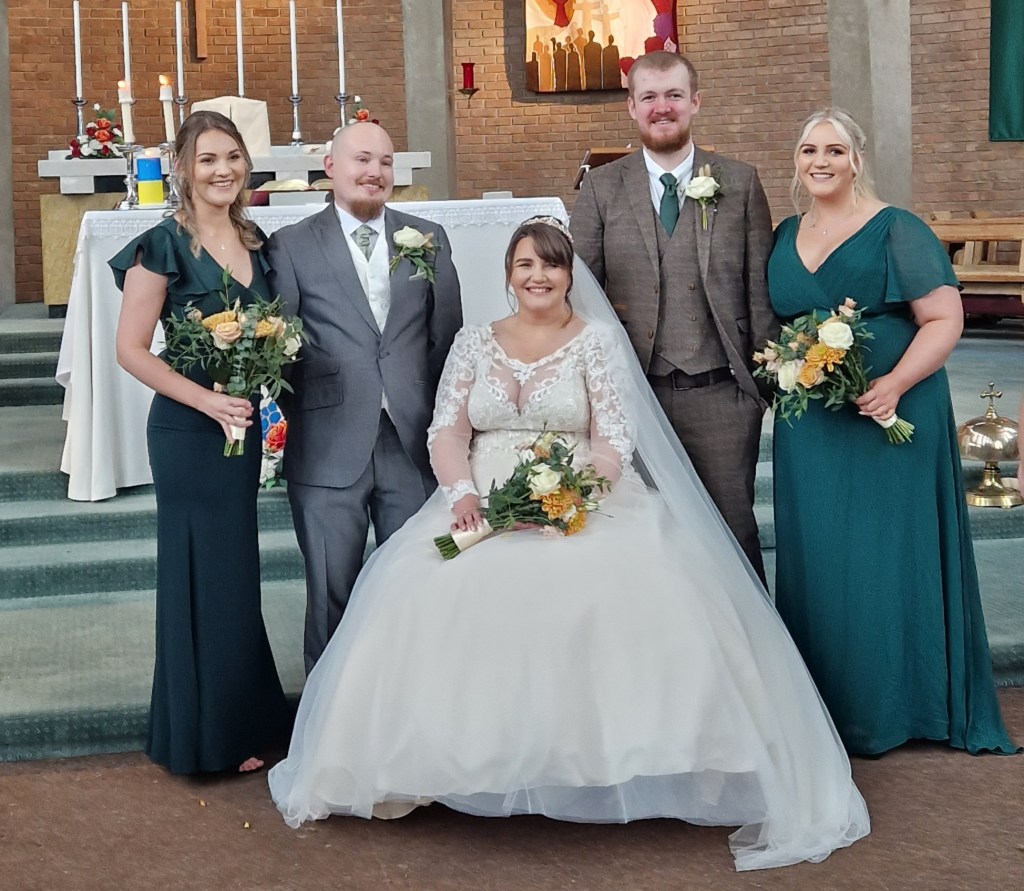
Saturday 28th October 2023 we stood in front of our loved ones at our parish church and said I do.

Left to right: my sister Eloise, my husband Damon, myself, my brother Alexander and my sister Chloë

It was an absolutely magical day which I will post about in more detail later in the week. I’d been panicking in the months leading up to the day about my health. After two bouts of sepsis this year alone, my bladder becoming paralysed, gastroparesis, heart complications and more I was worried I wouldn’t make it through.

I talked all this through with our church Father, venue, photographer, families and we brainstormed methods of helping me pace. During the service the church put two chairs out for us to sit on so I wasn’t taxing my body and they told me to stay seated if I needed to even if I should be standing. I kept a stick that I had brought specifically from Neo Walk Sticks, as I loved the clear fizz design, close by for the marriage rite and walking the aisle; these were my goals for the days, and I was thrilled to manage them.

For the rest of the day I used my wheelchair. Dancing the night away in my chair meant that I could spend the night rolling on the dance floor which I could never have done otherwise.

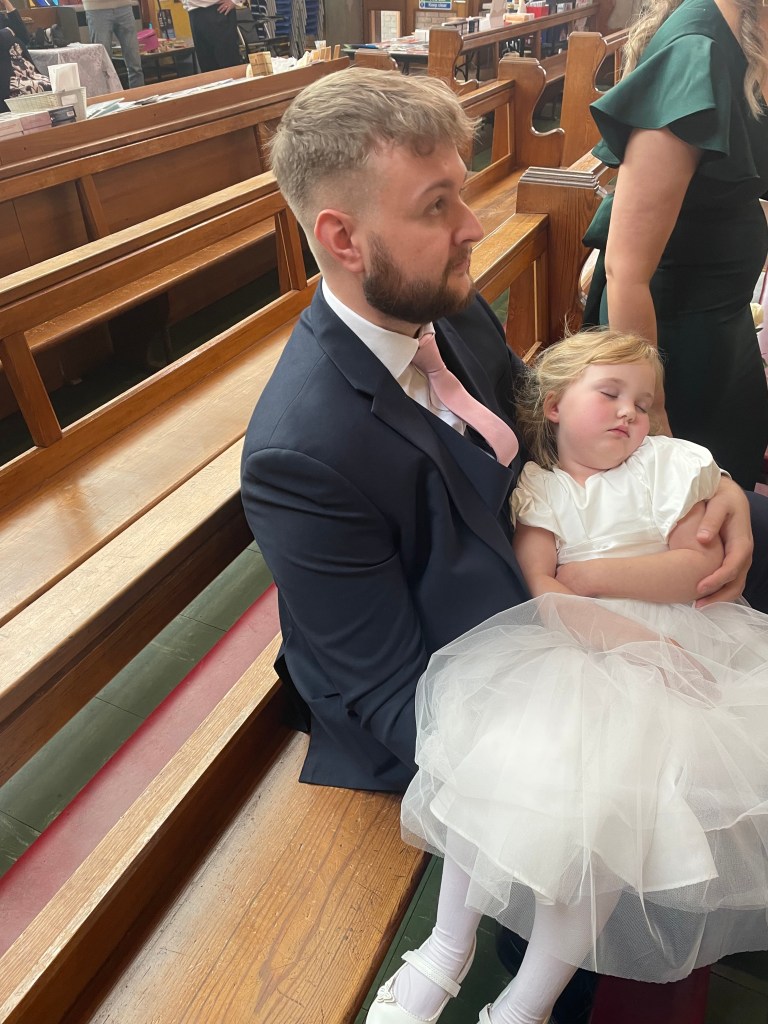
My little girl slept through the service on her uncles lap
Posted in Archive, June 2023

Hospitals & Consent

Over the last few years I’ve not had the best experiences at my local hospital. I’ve gone in incredibly sick and been discharged in a worst state multiple times. It’s got to the point now where I have to know in myself that I can no longer cope at home before I will agree to go.

The other night after spending several hours vomiting uncontrollably, passing blood, and doubled up in pain so severe I was unable to talk through it or focus my partner rang an ambulance. I dislocate multiple times a day and live with organ prolapse, I’m good at handling pain but this was another level of hell.

The ambulance we would end up cancelling as it was several hours away and family could drop me there quicker. I was sat in my chair, throwing up, crying in pain and quite frankly not coping. A few hours into the wait I seized. I don’t remember this. The doctor the next day told me I’d managed to seize out my wheelchair onto the floor, they’d had to scoop me up and get me round to resus.

I can remember throughout the night they attempted multiple times to place a cannula but failed. I desperately needed meds and fluids, and asked for them to use an ultrasound machine and ideally a consultant as my veins are extremely hard to find but also blow very easily due to my Ehlers-Danlos syndrome. This request was ignored and they decided not to administer the fluids or meds I needed. I was there for over 12 hours. Eventually they decided to take blood from an artery by my groin. Again I requested an ultrasound and experienced Dr such as the anaesthetist on call (they are used to my veins and are patient) instead they pressed ahead blindly and painfully.

I’ll delve into this topic another time in more detail but please understand that a disabled person’s medical aids are an extension of themselves. You should never touch them without first gaining consent. While I was in the hospital I had the valve removed from my Cathater. They did not have my consent to do this. They had asked to attach a bag which was fine, I attach bags to the valve all the time. But I would never consent to the removal of the valve as then I would be on free flow which would cause horrific spasms as I have a neurogenic bladder. The valve is the only thing that helps manage these spasms. Yet it was taken off and binned without consent.

I was discharged that morning and handed a few days worth of the same antibiotics I had just finished and sent home. When my partner arrived in resus to collect me the first thing he asked was if I was well enough to go home. I shook my head but said nothing. Within an hour of being home my district nurses were calling another ambulance for me. My temp was 39.5, I couldn’t stop shaking and I was still in agony. There was a four hour wait and with how concerned my team were Damon loaded me back into the car.

This time they listened a bit better. We established that actually my bloods had shown a kidney infection and I needed a completely different set of antibiotics. But was once again sent home. Today I’ve hardly stayed awake. My other half stayed home to look after me and has had to wake me up for my nurses and meds. I’m exhausted, still with the raging temperature and just frustrated.

Posted in Archive, May 23

Patience: Can you lend me some?

Patience Can You Lend Me Some

Poetry isn’t my typical style. Even in my job as an author I write children’s books and YA fantasy fiction. However putting pen to paper and writing whatever comes out is how I deal best with my emotions.

I wrote this last night while in the bath. I’ve been struggling with nerve issues recently along with another round of optic neuritis that has drastically impacted my sight. This is the unedited raw poem that came from the turmoil. It may not be the best but it’s the best representation I have of me right now. I know others will understand.

Posted in Archive, March 2023

Check Engine Light

It’s been a bit of a rollercoaster of emotions these last few weeks. That’s to be expected I suppose. Gastroparesis and its impact on my Dystonia and other conditions has been yet another life pausing event. Another painful event. Another force outside my control. There’s been a lot of tears in frustration, upset, anger and confusion at just how to manage this new hurdle. I don’t doubt that I can and will adapt. It’s the grief cycle again.

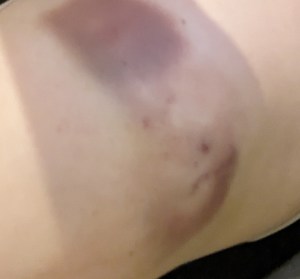
It’s got to the point where the doctors have finally agreed to have the district nurses come to my home three times a day to administer antisickness injections. These are the only antiemetics that I have found of any help. But in typical misbehaving form that my body truly excels in, this has not gone smoothly. I expected some bruising, but I’m now looking a tad black and blue, and bleeding a silly amount each time. It’s worth it to be able to keep my Dystonia and heart medication down though.

I’ve found the pain from the Gastroparesis, on top of my Dystonia has left me exhausted physically and emotionally.I do my best every day. Some days my best may look like nothing. I like to call that energy saving mode. I’m in that mode a lot lately as I’m acknowledging what my body needs. This is hard. Sounds silly I know. But life doesn’t exist for us to function this way. It’s geared up so that the expectation is you fall down, you brush yourself off and carry on. I need to stay down a bit longer.

The best way to describe what I’m trying to say is this. You wouldn’t set out on a long trip with a car that had a check engine light flashing, four flats, a drop of petrol and no oil. You wouldn’t get anywhere, you’d destroy your car. My body is the same thing, it’s out of fuel, every light is flashing and tires are shredded. I need to spend some time working out how to patch me up and that’s ok. It’s allowed. It’s important to remind ourselves of that in a world that is fast paced.