Posted in Archive, march 2024

The Importance Of Addressing Ableism

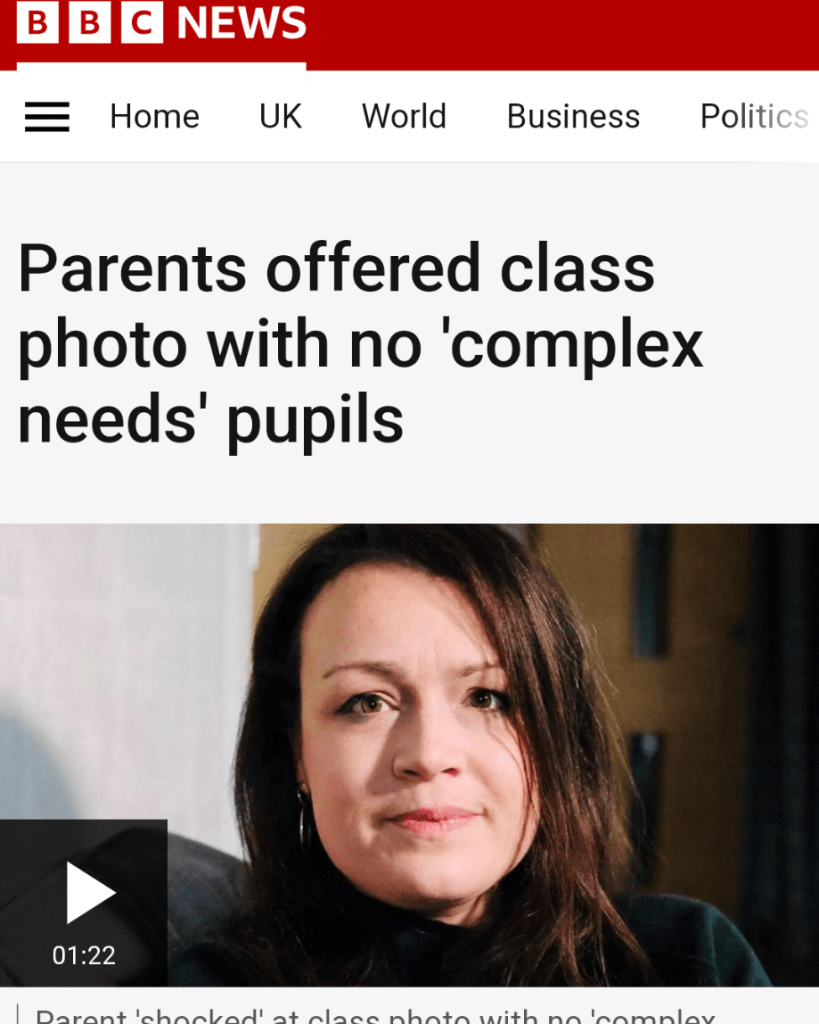
A screenshot from BBC News showing article title ‘parents offered class photo with no Complex needs pupil’. A woman is featured, with brown shoulder length hair, light make up, forest green top.

In a recent BBC news article, it was reported that parents were offered a class photo without any of the disabled pupils included. This act of ableism is incredibly disheartening and highlights the ongoing discrimination and exclusion that many disabled individuals face on a daily basis.

When my Dystonia first manifested in 2010, I refused to attend school for three months. My face was distorted by spasms which left me highly self conscious. If I had been subjected to such discriminatory treatment, I can only imagine the lasting impact it would have had on my self-esteem and willingness to participate in school.


Ableism, is a pervasive issue that has far-reaching consequences. This prejudiced mindset leads to exclusion, negative stereotypes, and unequal treatment, reinforcing the idea that disabled individuals are inferior.

What is particularly troubling about this situation is that there were multiple opportunities for intervention and correction. The school staff should have immediately recognized the discriminatory nature of excluding disabled pupils from the class photo and taken steps to rectify the situation. Furthermore, offering the photos to parents should never have happened.

It is disheartening to see that acts of ableism are still prevalent in our society and in our schools. It is crucial that we continue to raise awareness about the importance of inclusivity and equality for all and challenge discriminatory behaviour.
Posted in Archive, march 2024

The UK Government’s Violation of Disability Rights: What You Need to Know

Disability inclusion as a human right should be universally upheld. Too often it is not. In 2017, the UN found the UK government guilty of ‘systematic and grave’ violations against the disabled community under the UN Convention on the Rights of Persons with Disabilities. The UK then government failed to attend a crucial hearing in August 2023, proividing no reason for their abscene. Disabled individuals and organizations who attended this hearing provided evidence to the UN committee of further negtive long term impacts to disbled citzens due to governmental policies and funding cuts/services.

March 18th, 2024 the UK government is expected to appear before the UN committee and demonstate the actions it has taken since 2017 to rectify these human rights violations. At the heart of these violations are the breach of three key articles: Article 19 (independent living), Article 27 (Work & Employment), and Article 28 (Adequate Standard of Living & Social Protection). t is imperative for there to be global prescence to witness this committee, so as to increase awareness on the current lack of action taken to address the violation of disabled peoples human rights in the UK and to advocate for this ongoing crisis. You will be able to watch this session virtually using the below link.

Where can I watch? https://webtv.un.org/en/asset/k1s/k1svtljvtr

What time? 2pm-3:30pm UK time

Posted in Archive, march 2024

Health’s Expiration Date: Why Accessibilty Shouldn’t Be An Afterthought

Health is often discussed in a way that would imply it is a given untill old age. It is a mindset that is flawed and dismissive of the many factors that can impact our health at any age. It ignores genetic predispositions, accidents and injuries, age related complications, conditions that develop with unknown causes, complications caused by other illnesses e.g stokes, etc.

It is necessary for there to be a shift away from the idea that health is a given, to one where it has an expiration date. With that viewpoint in mind, I ask why does society remain as inaccessible as it currently is? The majority of us will, at some point in our lives experience a level of disability. Despite this accessibility across the board is not where it needs to be to make life equally accessible for all.

Health expires, so why does accessibility remain an afterthought?

Posted in Archive, march 2024, September

Look Beyond The Wheelchair

The wheelchair often becomes the point of attention when people first meet me. I often get met with “What happened to you?” or “But you’re so young!”. Questions that are meant with no malice I know. Society has ingrained in many the perception that the wheelchair is one of the defining symbols of disability. However, if we were to literally remove my wheelchair from the picture, would you still be able to perceive any indicators of my disability?

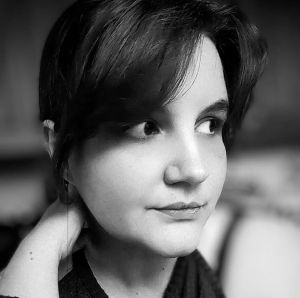
Rebecca, a white woman with her hair tied up, gazes off to the side in a black and white snapshot.

When we remove my wheelchair rather literally from the picture, it becomes almost imposibile to recogize any of my conditions. Their lack of visibility does not however make them any less real. Society, as we have seen repeatedly, tends to validate only those disabilities in which it can ‘prove’ the condition/the condition is visible. This is extremely problematic as only a small percentage of the disabled population are classed as having a ‘visible disability’.

Using myself as an example, I live with organ prolapse, I’m reliant on a suprapubic catheter, I experience extreme levels of chronic pain, I have PTSD, Dyspraxia,  find too much visual stimuli brings on migraines and numerous other conditions that are not immediately obvious. These symptoms can impact  day-to-day functioning, and when combined, they can be truly debilitating. Creating a more accessible world would greatly enhance the lives of those with disabilities. This would involve not only providing wheelchair access but also increasing the availability of disabled-friendly facilities, raising awareness among retail staff about the various challenges customers may face e.g visual, auditory, sensory difficulties etc and working to create an inclusive environment of understanding and patience.

It’s vital to recognize that disability is unique to every individual and illness. It’s a sliding scale in which each person moves in accordance with their changing conditions and the factors that are impacting them that day. It’s a vast scale; we need to refrain from reducing people and their disabilities to simple tickboxs.

Posted in Archive, march 2024, September

‘Traditional Employment Is A Requirement’

Over the past few months, my husband and I have encountered a recurring challenge while searching for a new home: many landlords insist that both of us must be in ‘traditional full-time employment’. This has been quite an obstacle for us. Despite my nearly seven-year career as an author, landlords always seem wary when they learn that I receive PIP, while barely sparing a glance at my husband’s long-term employment history.

With our current landlord asking us to find a new home by the end of March, we’ve found ourselves having many alate-night conversation, trying to figure out a solution. I suggested that I explore alternative job opportunities that were disability friendly.  In the early stages of my career, I used to write only during the night – while not ideal, it’s a balancing act I could manage again if necessary.

However, navigating the job market presented new challenges. While remote work was widely advertised just a few years ago, many companies now require office-based or hybrid roles. For me, a fully remote job is currently necessary due to my reliance on physical assistance to leave my home.

The more we talked about these issues, I kept coming back to the same questions:

What exactly is ‘traditional’?

If our household income meets your requirements, why should my disability or my job title matter?

At the moment, we don’t have a solution. There’s no magic fix. In the meantime, I plan to continue documenting these interactions and hope that we can make progress towards more tolerance and equality in society.