Posted in Archive, march 2024

The Importance Of Addressing Ableism

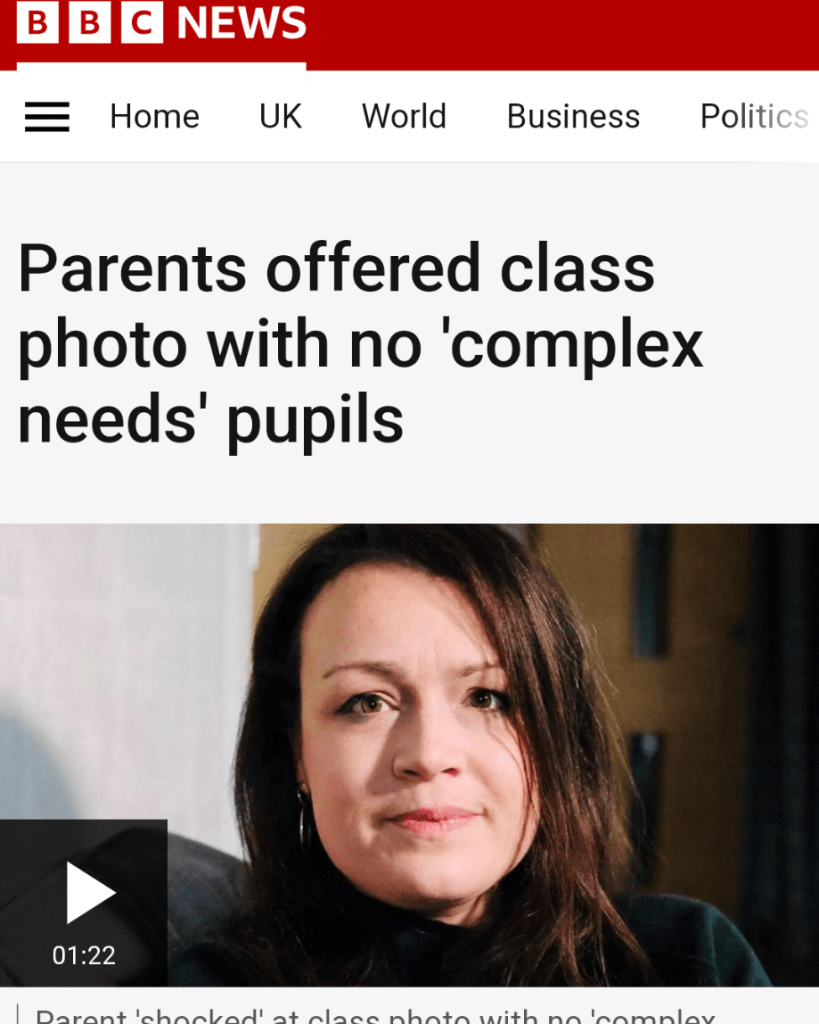
A screenshot from BBC News showing article title ‘parents offered class photo with no Complex needs pupil’. A woman is featured, with brown shoulder length hair, light make up, forest green top.

In a recent BBC news article, it was reported that parents were offered a class photo without any of the disabled pupils included. This act of ableism is incredibly disheartening and highlights the ongoing discrimination and exclusion that many disabled individuals face on a daily basis.

When my Dystonia first manifested in 2010, I refused to attend school for three months. My face was distorted by spasms which left me highly self conscious. If I had been subjected to such discriminatory treatment, I can only imagine the lasting impact it would have had on my self-esteem and willingness to participate in school.



Ableism, is a pervasive issue that has far-reaching consequences. This prejudiced mindset leads to exclusion, negative stereotypes, and unequal treatment, reinforcing the idea that disabled individuals are inferior.

What is particularly troubling about this situation is that there were multiple opportunities for intervention and correction. The school staff should have immediately recognized the discriminatory nature of excluding disabled pupils from the class photo and taken steps to rectify the situation. Furthermore, offering the photos to parents should never have happened.

It is disheartening to see that acts of ableism are still prevalent in our society and in our schools. It is crucial that we continue to raise awareness about the importance of inclusivity and equality for all and challenge discriminatory behaviour.

Posted in Archive, February 2024

Discrimination In The Rental Market

In our recent search for an accessible home following being served with a S21 notice and my changing health needs, we have encountered a disappointingly high level of discrimination and prejudice. Finding an accessible property has proven to be a challenging and frustrating process, not because suitable accommodations do not exist, but simply due to the discriminatory attitudes of several estate agents/landlords we have encountered.

In both private and social housing sectors, we have faced barriers. Despite legal protections against discrimination based on disability, we have been told by multiple landlords that they do not accept wheelchair users or those who do not have traditional full-time employment. The scarcity of accessible social housing options only adds to the difficulty of finding a suitable living situation before our S21 expires.

What has become abundantly clear throughout this process is that the real obstacle we face is not my health or disability, but society’s unwillingness to make simple accommodations for individuals with disabilities. Accessible housing should not be considered to be a luxury but a basic necessity. Yet we find ourselves constantly met with obstacles and roadblocks. While there may be laws in place to protect against discrimination, they seem like empty gestures in the face of the everyday reality.

It is time for society to prioritize accessibility and inclusivity in housing and other areas to ensure that individuals with disabilities are able to live independently and with dignity. The current state of affairs is unacceptable, and it is up to all of us to work towards a more inclusive and accessible society for everyone.