Posted in Archive, January 2021

Hormones and Chronic illness

Hormones, they hit us out of the blue in puberty and never stop showing up no matter how much we hope they may just skip a month. Even before my diagnosis of Dystonia my monthly visits from the witch were awful.

During my teen years my periods were unpredictable; sometimes not showing up for months and sometime arriving every two weeks. They would leave me doubled over the toilet in the night throwing up from the cramps, and going through a pad in under an hour over and over again. I spent years visiting my then GP who told me all this was normal and that I needed to learn to deal with these symptoms. It was only then when I was studying for my midwifery course that I had the courage to go to a new gp who recognised my distress and referred me to gyny. One operation later and I was diagnosed with Endometriosis.
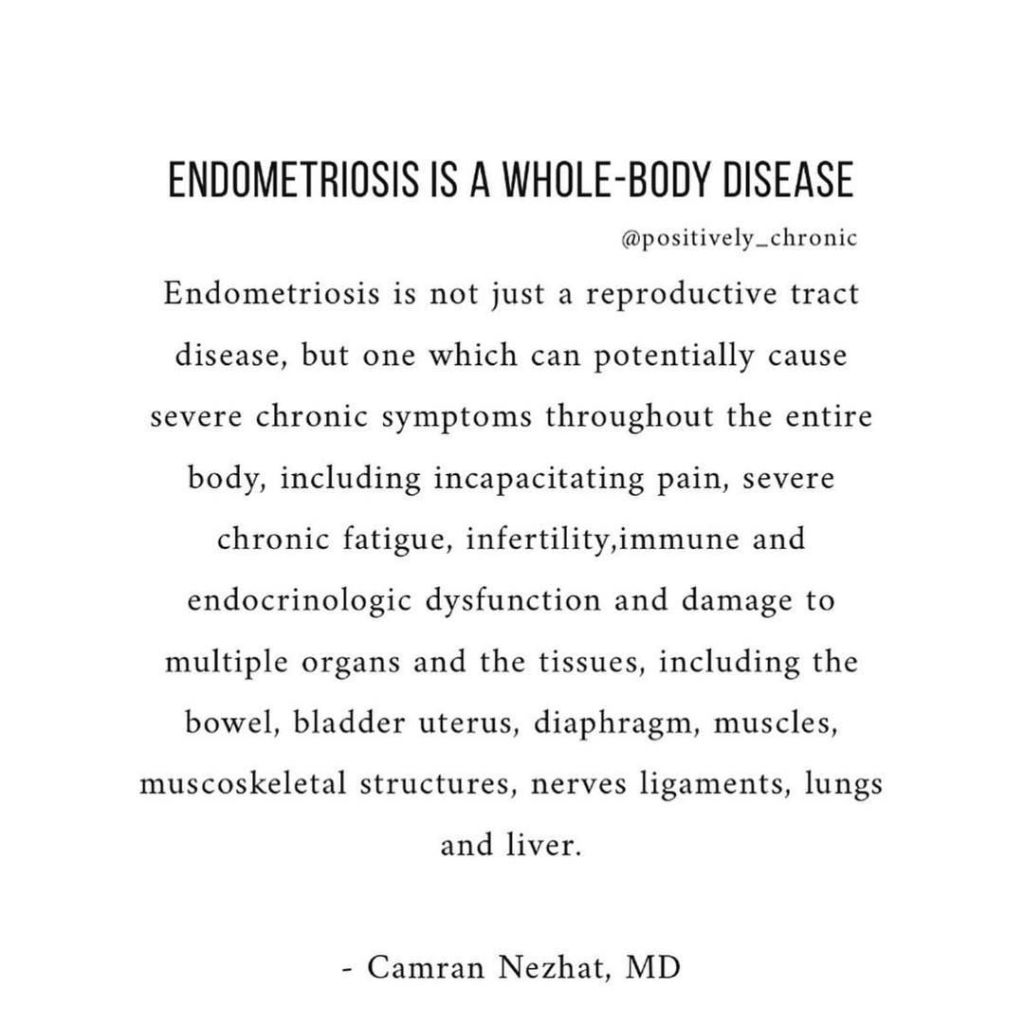
Quote from Camran Nrzhat, ND.

Now my periods are worse than before and on average last 72 days. Yes you read that right. They last 72 days. Now normally they’d treat with a hormonal contraception to stop the period. Here’s where my health comes into play. My spasms, now I don’t know whether this is my Dystonia or EDS, but I can’t use any intrauterine device as the spasms physically reject it from my body which is fairly uncomfortable. The pill*/patch/injection all work on giving you progesterone however I am unfortunately one of those rare Ehlers Danlos suffers who can not tolerate this. The increase causes a dramatic increase in dislocations body wide.

*I am aware there are pills that are not just progesterone based however due to the fact I get daily migranes with aura I cannot take these as it increases my stroke risk.

Between the prolonged bleeding which leaves me severely anaemic (currently 3.1), the increase in spasms, dislocations, fatigue, it’s fair to say hormones really screw me over. So gentle hugs to all who also experience this. Remember chocolate always helps!

Posted in Archive, December 2020

Genes and Dystonia

Following on from yesterday’s Facebook live where we touched briefly on genetic causes of Dystonia, I wanted to delve into this a little more. DYT1 gene is the cause of some cases of early onset Dystonia and seems to be the one people are aware of. However there is a number of other genes that can cause Dystonia. Knowing whether it is a genetic cause is worth investigating as treatment can differ. For example I have the GCH1 gene which is the cause of Dopa Responsive Dystonia. I’ve lived with my symptoms for eight years and only recently found this out. I’m now awaiting to start on the appropriate medication for this particular type of Dystonia.

Taken from http://www.scielo.br/scielo.php?script=sci_arttext&pid=S0004-282X2015000400350#:~:text=DYT6%20dystonia%20has%20an%20autosomal,no%20sex%20differences%20identified9.

Being diagnosed with Dystonia for the majority of people is a long road, and more complicated still if you don’t know the medical history of your parents, grandparents etc. I haven’t had contact with my father for years but I know from my mum that he had hand tremors and was often called shakey. Now this could be caused by anything and that’s important to remember but based on the fact that my hands also spasm and tremor it’s a significant point.

When I was on the initial road chasing for a diagnosis only one doctor recommended genetic testing and this was never followed up on. I then spent years fighting against the label of functional Dystonia, which seemed to being applied purely based on my previous traumas. It became a frequent sticking point, one in which I often pointed out that fighting for treatment and belief was by far more traumatic at the time than issues I’d already worked through with therapists.

It was only after resorting to private genetic testing that we discovered that I had a genetic cause; I’d been blaming it on a horse riding accident for years purely because my neck spasms started shortly afterwards.

So does having a genetic cause change anything? Yes! Some types of Dystonia are far more likely to respond to Deep Brain stimulation, while others respond to specific medications better.

It is important to remember however that not all Dystonia causing genes are known yet. This is one of the reasons family history is so important. I only went digging into my genes after my maxfax surgon mentioned that their appears to be a link between Ehlers-Danlos Syndrome and Dopa Responsive Dystonia.

Other causes can be medication induced (tardive dyskinesia), brain injury, as a symptom of another condition etc. If you have concerns over the root cause of your condition please speak to your neurology team.

Posted in Archive, December 2020

Chronic Aspiration

Today I had a meeting with speech and language to assess my ongoing difficulties with swallowing. Some days the issues fade into the background and are not to much of a problem, other times I struggle to swallow anything which has previously resulted in over a week in the hospital on IV fluids and having a temporary NG tube placed. I had no idea what to expect from the appointment as I’ve not met with speech and language before.

She came to my house, and was immediately met with Stefan and Evie talking a thousand miles a minute, both very curious over her PPE. We discussed my symptoms and long medication list and then she got down to examining me. She had a feel of my throat whilst I drank an ensure and picked up my usual spasms. While we were talking I was doing my usual post meal coughing, something that’s mild enough that I don’t really notice it, nor was I aware that my voice then became hoarse something my partner brought up.

The speech and language therapist explained what was happening was due to my spasms that I was aspirating during my meals. She’s arranging a barium swallow so they can get a look at the extent that this is happening. It also explains why I keep getting such bad chest infections; the last one left me needing two rounds of antibiotics and a course of steroids.

She mentioned the possibility of a PEG tube again, something that’s been circled around for a while, as well as refferal back to the dietitian. This will hopefully be after the barium swallow has been conducted as this should show what consistency of liquid will be best for me.

I’m feeling quite positive about it all after today’s meeting and will be hearing from her again in four week for an update.

Posted in Archive, December 2020

What’s In Your Flare Box

The concept of a flare box is one that I didn’t properly venture into untill I attended the Stanmore Inpatient Pain Management course back in early 2016. It was really impressed on me that this was something that could impact my pain management. As soon as I got home I set about setting it up. Almost five years on and I still use these! In fact I have one in my bedroom and a second one by my desk downstairs so that they’ll always be accessible when needed.

A flare is generally considered to be a worsening of symptoms over a fair length of time e.g a week to a month or so. This is in comparison to just having a bad day or two of symptoms, then reducing to your normal levels.

My two boxes differ slightly and reflect the area of the house I’m in. My upstairs box contains several TENs units and chargers, multiple wheat heat packs, a symptom diary and pen so I can write down anything that I think may be important to remember to tell my drs, some volterol cream, neck brace and various other splints for dislocations, earphones, lavender pillow spray, and some books.

My downstairs box has all of the above but it also has some cue cards for if I’ve struggling to physically talk, so I can just flash these up instead; these have my most used phrases on e.g please can you fill up my flask? Please can you reheat my wheat pack? It also contains some electrolyte water soluble tablets for if it’s my POTS is also worsened.

Everyone’s flare kits differ depending on what they feel they need in the flare, and my deffinently have evolved over time. For example right now both have spare socks added to them as I know cold feet induces spasms for me. So in winter some extra warming bits are a must. Plus five years ago I wasnt a mum, so there also contained a notepad with a list of easy binging Netflix show, a stash of free from chocolate and anything else that cheered me up.

Let me know in the comments if you use one!

Posted in Archive, December 2020

So This Is Energy?

If you’ve been following my blog for a while, or if you’ve been here since the beginning, you’ll know that pacing (for many years) was like a swear word to me. The doctors threw it around a lot, really pressed the importance of it, but no-one really explained how to implement it properly into my life. I felt like I was being told to sit down and accept my fate of not being able to do anything, anymore. As someone who likes to be busy, I didn’t accept this instruction.


Don’t misunderstand me, I tried. I’d manage a few days of what I viewed as pacing and then I’d slip back into my old habits, trying to live a normal life of activity with no adjustments. The consequences of doing this was that I hit that ’empty spoon’ wall hard and often. Each time regretting it as I then took days to recuperate.


I’m currently coming towards the end of the 3 diplomas I’ve been studying, in Health, Wellness and Life Coaching – specialising in life management with chronic illnesses. I’ve loved the course itself but seeing the difference applying it to my daily life has had, has been amazing. It’s completely changed my understanding of pacing and therefore helped me to apply it to my life with ease.


Yesterday, for example, I was feeling much better than usual so I asked my son what activities he would like to do. I had already decided I would say yes to whatever he chose to do and would find a way to adapt it if needed. He asked to cook with me. So we got the soup maker out to eliminate the amount of cutting and hot heavy lifting of pans. He loved peeling the onion and garlic, cutting out the amount of herbs. It was a gentle session, sat down and full of laughter.
I know energy filled days won’t always be here even when I’m 100% on track, but by pacing, asking for help more etc.it reduces how often flare ups will happen. It’s making a huge difference not just to how I’m coping physically but also to my mental health which has had a real boost.

Posted in Archive, December 2020

International Day of Persons with Disabilities 2020

The theme this year is ‘not all disabilities are visible’. This is stressing the fact that not every condition is immediately visible; according to the WHO report roughly two-thirds of people with a mental or neurological disorder will put off going to a doctor for help largely in part due to stigma, discrimination and neglect. As someone who has very much been on the receiving end of this trio when it comes to living with multiple neurological conditions, this comes as no surprise to me.

Looking at me as I am right now, curled up on the settee trying to not make to much noise so as to not wake the kids, you could be forgiven for not knowing I had a disability; even if your keen eyed and spotted my odd eyes you wouldn’t know that my sight was impacted and would be unlike to think too much about it. However even when you can spot my spasms or a dislocation, you cannot see my brain fog, my sensory loss, the neuropathic nerve pain, no one can see fatigue fight, the pain induced insomnia, the sixty odd dislocations a day and so much more.

Spot the faulty eye

I love talking with young children about my disabilities because they don’t hold back. “How does your chair work?” “Can you get upstairs?” “Do you have to put you your chair in the bath?” The look of fear on the parents faces as they worry that something not deemed politically correct may be asked is what I find disheartening. Without these beautiful minds being curious how can stigmas be fought against, broken down and normalised? This should be praised and encouraged. I appreciate that not everyone will want to be asked, but you’ll be surprised by how many people are more than happy to discuss these things.

Disabled people, whether the condition is visible or not, physical/mental/learning or otherwise are still people. Next time, pause, maybe ask a question, you could be amazed at how it opens your eyes.

Posted in Archive, Novemeber 2020

The Elephant

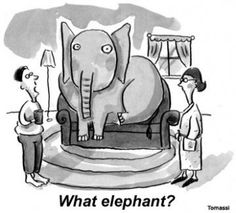
I live with an elephant in the room; it comes with me wherever I go. Some people don’t mind the elephant, some have one of their own, others have a dislike for these elephants. It’s not always clear as to why. Maybe it’s worry, perhaps lack of understanding, and sometimes it’s ignorance.


Learning to accept my elephant of many names was a task that took great strength and many many years of learning to love myself all over again. I’m a sensitive soul; when my elephant upsets others it’s hard not to be offended. But I cannot change what I am, nor the diagnoses attached to me, or the symptoms that are ever present. Therefore the elephant is always in the corner. Sometimes small, sometimes big, sometimes putting on quite the performance.


However, I am who I am because of the path my life has taken. Disability has taught me a lot about myself, and it has opened my eyes to the need for self advocacy in a world that is a far cry from being disability friendly. The next time you are in a room with an elephant, address it, embrace it. Disability elephants are not scary things.

Posted in Archive, Novemeber 2020

Who to Turn To?

After a week long stay I was finally discharged from one of our local hospitals yesterday evening. I was admitted due to pain in my left eye which has optic neuritis, it had become overwhelming, to the point I felt I had to apply pressure on my eye to relieve it. I had also lost the sensation in the bottom half of my right leg.

During my time in the hospital they decided to carry out a Lumbar Puncture and MRI knowing that my neuro team wanted to do these anyway. The LP side effects I’m still dealing with, I am still having issues with my bladder, my whole leg now has no sensation, and I have a permanent horrondous headache. Both tests came back clear which left the dr’s there confused. On discharge I was diagnosed with Complex neurological disorders and global sensory loss in the right leg, and told my neuro team would take over figuring out the cause.

Today I had an Opthalmology appointment at another hospital. The opthamologist in charge of my care is wonderful. I sat down, he faced me and said “So you have MS ” he was quiet matter of fact about it. I corrected him and pointed out that my tests had come back clear. He muttered that they were wrong and went on to examine my eyes. After several tests he sat back looked me in the eyes and again said “Rebecca you have M.S”. He was quite insisted that my doctor’s must have missed something on my scans due to the state my eyes were in.

So where do I go from here? Such wildly different view points, everyone agreeing that my local neurology team needs to see me again and review what the different teams have found. However getting hold of them is darn impossible. Both myself and my gp surgery contacted them a few days before I was admitted informing them I was going downhill, and needed input desperately. Neither myself or my gp’s surgery has had a response yet.

Right now I’m very emotional and very stressed. I’m taking things moment by moment and trying to just accept things as they are and get on with it. But I work best with action plans and right now I don’t even know who’s responsible for my care. I feel very lost in the system.

Posted in Archive, Novemeber 2020

Local Anaesthetic and Me

When I was 17 weeks pregnant with my daughter I underwent surgery to remove a mole on the underneath of my right breast that had early cell changes. Due to the fact I was pregnant and it was a relatively short surgery they didn’t want to give me a general anaesthetic, so decided a local would do. Unfortunately my Ehlers-Danlos means I have no response to local anaesthetic and felt every cut, and every stitch. The whole process was rather traumatic and I’ve worked hard at trying to forget it.

I was admitted to my local hospital a couple of days ago due to worsening symptoms in my eye and leg. Due to this it was decided last night to bring my lumbar puncture forward to that evening. I explained that local anaesthetic does not work in the slightest for me. They decided to give me a double dose in the hope it would work; it didn’t, which I expected, maxfax team has tried injecting several times this amount with no effect previously. Now lumbar punctures are known to be painful anyway, so to know I was having one without effective pain relief was nerve wracking to say the least.

It was one of the most agonising experiences I have ever had. It took multiple attempts to place the needle correctly as they found the spaces inbetween the spinal collum to be be extremely narrow. It’s been just over twenty four hours since and I’ve struggled to move. My whole back is in horrondous pain, taking a deep breath or swallowing liquids really seems to agreviate it. I’ve also lost sensation over my waterworks which is concerning. I’ve spoken to the consultant but everyone’s answer over this is that I need an MRI, which apparently is booked but no can tell me a day or time.

I’m missing my kids loads but I know that being here is where I need to be. If this helps put a piece of the medical jigsaw in place and leads to better management that can only be a good thing. Just got to take everything one moment at a time.

Posted in Archive, Novemeber 2020

Vulnerability is Strength

It’s a painsomnia night so I thought I would share with you all something that I’ve been coming back to frequently recently. Personally I’m a very sensitive, emotional person; now some may view that as a bad thing, others a good thing, some of you will be neutral. I can see the pros and cons, but it’s what makes me me, so yes I may cry buckets everytime we watch certain episodes of Vikings, or The Lion King but i’ll also laugh myself to stitches five minutes later. It’s a rollercoaster of life. It’s real, honest and truth.

So why do I, and I know many others with chronic illness will be able to identify with this, go on autopilot everytime a doctor, family member or friend asks after us? You know the drill, you walk into the drs room the doctor greets you and asks how you are before you get down to the nitty gritty. It’s a formality, so like a healthy person you respond with I’m good thanks, and you? It’s ridiculous! Why is it so hard to say you know what I’m actually not great at the moment and I need some help.

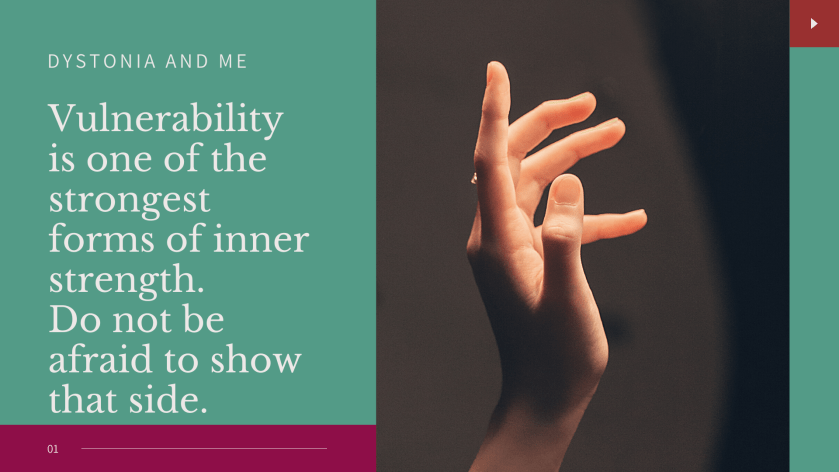
I forced myself to do this yesterday. I could hear the usual auto response slipping out my mouth, so I caught myself, took a breath, looked the doctor in the eye and said I’m pretty awful and I don’t know what to do. Now saying that wasn’t easy but boy did the relief for sharing the burden feel good. Making that choice to let the facade of I can cope with everything slip for a moment to ask for help took an incredible amount of inner strength and it’s something I’m going to practice doing more often. Vulnerability is not something to view in a negative light, in fact it allows others to reach out and see if they can improve your situation. Sometimes just talking things over can make a difference.

So just pause for a moment and think; are you like me and guilty of putting walls up? Is it worth flexing your inner strength and letting that vulnerability show? Let me know what you decide to do!