Posted in August 2025

A Hospital Stay Gone Wrong

The last five weeks have been an uphill battle, with far too much of it spent in the hospital. My sickness reached a point where I couldn’t keep fluids down, my electrolytes were out of balance, I was fighting another infection, and my body rejected almost every medication. As I’m currently in my third trimester, this was more than just uncomfortable; it was a serious concern.


When I was first admitted, we were hopeful. The medical team tried two different anti-sickness IVs and even steroids, but nothing made a difference. My body wasn’t tolerating anything. Eventually, the dieticians came to see me to create a plan to get some much-needed nutrition into me. However with Drs unable to agree with each other on cause – alternating between putting it down to a late appearance on Hyperemesis or a flarr up of my Gastroparesis, it became difficult to create a plan to follow.


This is where things started to go dramatically wrong.

Despite being reassured by the dietician that the Ensure Juice they provided was dairy-free, I went downhill almost immediately. My vomiting worsened, my brain fog intensified, and all my usual allergy symptoms flared up. The medical team dismissed my concerns, insisting these were just part of my condition. After several days of this, I asked to see the bottle myself. There, in clear, bold letters, were the words: Milk Protein.

I immediately stopped drinking it and demanded to speak to the dietician. When she arrived, she insisted my notes said I was lactose intolerant, not that I had a milk allergy—a distinction I had clearly emphasized in our previous conversation.

After an urgent meeting with the multidisciplinary team, the decision was made to place a nasojejunal (NJ) tube. This tube goes through the nose, down the throat, and into the intestine, bypassing the stomach completely. It was supposed to be a solution, but even getting the tube placed took nearly a week because the ward couldn’t provide the necessary care, and the receiving ward kept refusing the referral.

Once the tube was finally in, a nutritional feed was started. About an hour in, my vomiting increased again, and I started to feel a sense of déjà vu. I checked the ingredients. In bold letters, once again, were the words Milk Proteins. It felt completely inconceivable that this same mistake could happen twice.

I called the dieticians again, and this time, they informed me they couldn’t find a suitable feed for my allergies. I pointed out that a quick two-minute Google search brought up several options, but they explained they didn’t have contracts with the suppliers, so they couldn’t prescribe them.


Instead, they suggested trying a different high-calorie nutritional drink. We carefully went over the ingredients, and it seemed safe. Within minutes of trying it, I went into anaphylactic shock. My throat started to close, my heart rate skyrocketed, and I couldn’t breathe. Thankfully, a nurse was in the bay and immediately passed me my Epipen which I administered. The Epipen saved me, but we still have no idea what caused the reaction. It’s now simply labeled as an “unknown new allergy.”

At that point, I was discharged home with no feed. The plan was for me to push fluids and manage my medication through the tube on my own. I was happy to leave—I had lost all confidence in the hospital. We even managed to go on holiday, balancing making memories with my children and trying to manage the extreme fatigue.

A community dietician visited us not long after we got home. We made a plan for a soya-based feed and a pump. I was optimistic. But that optimism lasted only a few hours. I received a phone call informing me they had arranged for me to be readmitted to the hospital due to my continued vomiting, poor blood results, and significant weight loss. I was devastated.

I’m now back in the hospital, waiting for the daily doctor rounds, hoping they will discharge me. But in all honesty, I have little faith left. I’m currently on a soya-based feed we had to buy privately, but at over £160 a week, this isn’t a long-term solution.

My mental health has been impacted massively. I’m exhausted and I just want to be home with my family. Between these repeated failures and having to constantly advocate for myself—including after a nurse spent ten minutes passionately telling me I could be cured if I simply changed my diet, took supplements, and prayed hard enough—I am at my wits end.
Posted in September 2024

My stance on the Nanowrimo controversy

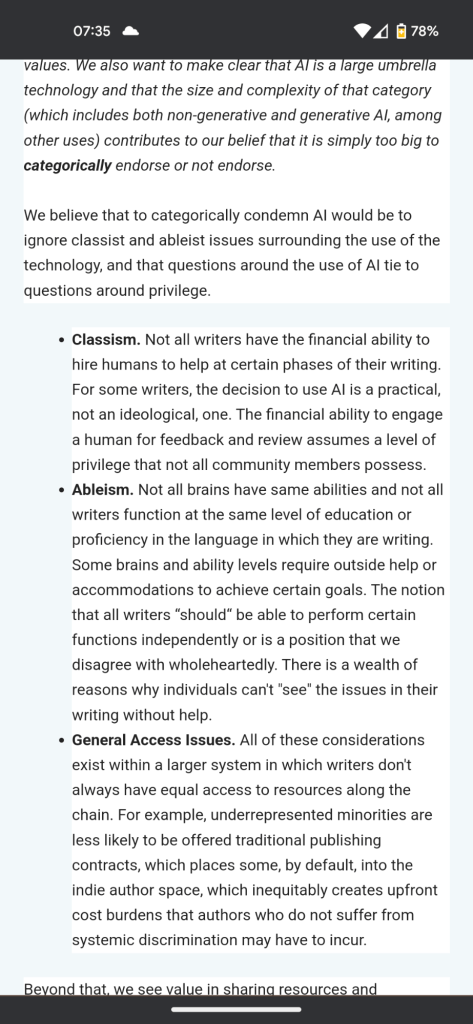
Nanowrimo have recently released a statement (see below) which can only be classed as ableist and classist. Therefore I will not be participating in any of their events moving forwards.

The disabled community tirelessly fights against ableism in every area of life. Nanowrimo’s position suggests that disabled writers cannot create quality work without relying on AI, which I find deeply troubling as an author with Dyslexia and multiple physical disabilities. Their stance is dismissive of the many disabled authors who have created incredible books and achieved great success.

The implication that writers from less affluent backgrounds are incapable of success is utterly ridiculous; throughout history, authors from all walks of life have achieved recognition and success.

While some have used Nanowrimo to help complete their titles, for many it is simply a fun challenge to themselves which also provides a community of likeminded individuals. However due to the disappointing, ableist and classist views that they have demonstrated it is not an event I will participate in again.

I sincerely hope that Nanowrimo learn from outcry of disabled authors and adjust their policies and views.

Posted in Archive, July 2024

12 years of Dystonia


Twelve years ago, Dystonia turned my life upside down, marking the beginning of a long and complex journey. Losing one’s health is a challenge that many of us face, but it’s one that few are prepared for. Initially, my mindset was consumed by the desire to “conquer” Dystonia and return to my career as a midwife. This remained my focus for many years. However, more recently, I’ve shifted my perspective to prioritize living a fulfilling life alongside my Dystonia. This shift has not been without its challenges, as I’ve had to come to terms with the fact that some of my previous goals are no longer attainable. Yet, I’ve found this mindset to have helped my mental health

One of the most significant lessons I’ve learned over the past twelve years is the importance of self-advocacy. I’ve grown in confidence in my ability to effectively communicate with medical professionals and educate myself about my condition. This confidence has been crucial in managing my health  I’ve developed a passion for advocating for individuals living with Dystonia and promoting greater awareness about this condition. I believe it’s essential to shed light on the realities of living with a disability and the necessary changes that must be made to create a more inclusive society.

I highly recommend Dystonia UK to anyone seeking advice or information about Dystonia. This charity was a lifeline when I was first diagnosed, and I still frequently utilize their resources today.

Posted in Archive, may 2024

Dystonia Superstar England – Shortlisted

I am absolutely delighted to share that I have been shortlisted  for the Dystonia Superstar England category in the Dystonia Awards.

As many of you are aware, I was diagnosed with Dystonia in my late teens, and over the past decade, I have been dedicated to raising awareness, advocating for those affected, and fighting for improved care and support.

I am now excited to invite you to show your support by voting for me through the link below, you are able to vote as many times as you like. I would like to extend my heartfelt thanks to those who nominated me for this award – I am truly grateful and moved.


https://www.dystonia.org.uk/awards-vote

Posted in April 2024, Archive

An Open Letter to the Prime Minister

Dear Prime Minister,

It is with deep concern that I am writing in regards to the discriminatory proposed changes to Personal Independence Payment (PIP) and other disability benefits. These changes have the potential to have a devastating impact on the lives of disabled individuals across the country and add to the stigma that disabled persons have to contend with.

The proposed changes, which include cuts to benefits and stricter eligibility criteria, are not only unjust but also a clear violation of the rights of disabled people. A fact that the United Nations has recently focused on. Many in the disabled community rely on these benefits to meet their basic needs and live with dignity. In too many cases the available benefits are not enough to cover necessities, a problem that is only growing due to the cost of living crisis. By cutting these benefits, the government is effectively pushing disabled individuals further into poverty and isolation.

It is important to remember that disability in any form is not a choice, and no one should be penalized for something that is beyond their control.  No disabled person should have to fight for help, nor contend with the government bringing in further discriminatory and ableist measures. It is the responsibility of the government to provide support and resources to those who need it the most, not to further marginalize and discriminate against them.

I urge you to reconsider these proposed changes and instead focus on creating a fair and inclusive system that supports all individuals, regardless of their abilities. Focus on enabling companies to create more jobs, including remote work, that is accessible and accepting of disabled people; the current scheme does not do its job. Disabled individuals deserve to be treated with respect and dignity, to be enabled to live a life full of opportunities, and it is our duty as a society to ensure that they have the resources they need to thrive.

I may only be a voice in a sea but I urge you to work towards creating a more just and equitable system for all.

Sincerely,

Rebecca Tunstall

Posted in April 2024, Archive

Let’s talk about Ableism

The recent podcast episode that featured ableist remarks and disgusting views towards disabled persons has sparked a conversation that needs to be had.

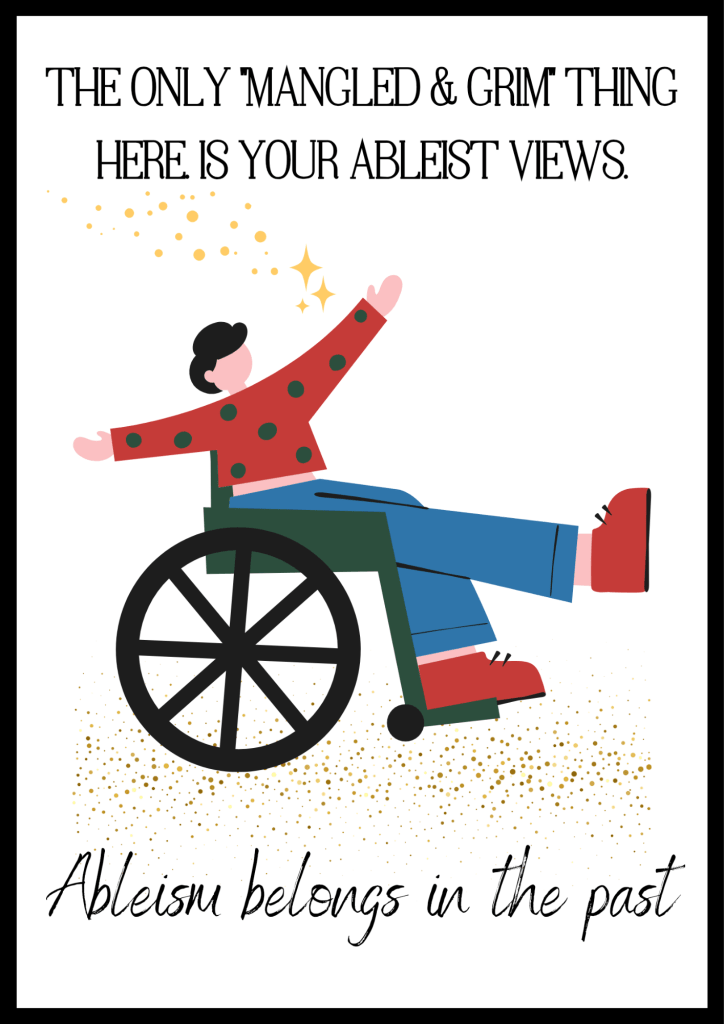
When we discriminate and label disabled individuals with disgusting terms such as ‘mangled’ & ‘grim’, we are contributing to the systemic ableism that is already prevalent in society. The last thing we need is for discrimination to be given a platform and normalized even further.

It is important to remember that health is in no way guaranteed, and you could become disabled at some point. Whether it be from an accident, illness, or old age, our health can deteriorate. Would you then view yourself as “mangled and grim”?

For those who have been affected by the hurtful remarks made in the podcast, remember your self-worth. You are deserving of love and respect, and ableism has no place in our society.

Posted in Archive, march 2024

The UK Government’s Violation of Disability Rights: What You Need to Know

Disability inclusion as a human right should be universally upheld. Too often it is not. In 2017, the UN found the UK government guilty of ‘systematic and grave’ violations against the disabled community under the UN Convention on the Rights of Persons with Disabilities. The UK then government failed to attend a crucial hearing in August 2023, proividing no reason for their abscene. Disabled individuals and organizations who attended this hearing provided evidence to the UN committee of further negtive long term impacts to disbled citzens due to governmental policies and funding cuts/services.

March 18th, 2024 the UK government is expected to appear before the UN committee and demonstate the actions it has taken since 2017 to rectify these human rights violations. At the heart of these violations are the breach of three key articles: Article 19 (independent living), Article 27 (Work & Employment), and Article 28 (Adequate Standard of Living & Social Protection). t is imperative for there to be global prescence to witness this committee, so as to increase awareness on the current lack of action taken to address the violation of disabled peoples human rights in the UK and to advocate for this ongoing crisis. You will be able to watch this session virtually using the below link.

Where can I watch? https://webtv.un.org/en/asset/k1s/k1svtljvtr

What time? 2pm-3:30pm UK time

Posted in Archive, march 2024, September

Look Beyond The Wheelchair

The wheelchair often becomes the point of attention when people first meet me. I often get met with “What happened to you?” or “But you’re so young!”. Questions that are meant with no malice I know. Society has ingrained in many the perception that the wheelchair is one of the defining symbols of disability. However, if we were to literally remove my wheelchair from the picture, would you still be able to perceive any indicators of my disability?

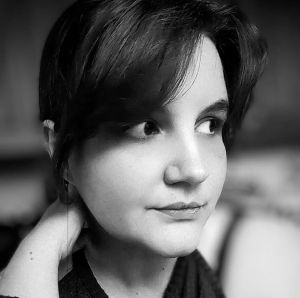
Rebecca, a white woman with her hair tied up, gazes off to the side in a black and white snapshot.

When we remove my wheelchair rather literally from the picture, it becomes almost imposibile to recogize any of my conditions. Their lack of visibility does not however make them any less real. Society, as we have seen repeatedly, tends to validate only those disabilities in which it can ‘prove’ the condition/the condition is visible. This is extremely problematic as only a small percentage of the disabled population are classed as having a ‘visible disability’.

Using myself as an example, I live with organ prolapse, I’m reliant on a suprapubic catheter, I experience extreme levels of chronic pain, I have PTSD, Dyspraxia,  find too much visual stimuli brings on migraines and numerous other conditions that are not immediately obvious. These symptoms can impact  day-to-day functioning, and when combined, they can be truly debilitating. Creating a more accessible world would greatly enhance the lives of those with disabilities. This would involve not only providing wheelchair access but also increasing the availability of disabled-friendly facilities, raising awareness among retail staff about the various challenges customers may face e.g visual, auditory, sensory difficulties etc and working to create an inclusive environment of understanding and patience.

It’s vital to recognize that disability is unique to every individual and illness. It’s a sliding scale in which each person moves in accordance with their changing conditions and the factors that are impacting them that day. It’s a vast scale; we need to refrain from reducing people and their disabilities to simple tickboxs.

Posted in Archive

International Wheelchair Day 2024

Wheelchairs are often associated with frailty, illness, and vulnerability, but they serve as valuable tools that offer freedom of movement and independence, liberating individuals from limiting circumstances. They are remarkable aids that significantly enhance the lives of those who use them.

Access to an electric wheelchair has had a positive impact on my quality of life. After experiencing frequent dislocations from using a manual chair, the electric wheelchair has allowed me to move around independently and safely, factors which cannot be stressed enough as to their importance.

As technology continues to advance, the future looks promising for wheelchairs, and I am eagerly anticipating the developments to come.

Posted in Archive, February 2024

Discrimination In The Rental Market

In our recent search for an accessible home following being served with a S21 notice and my changing health needs, we have encountered a disappointingly high level of discrimination and prejudice. Finding an accessible property has proven to be a challenging and frustrating process, not because suitable accommodations do not exist, but simply due to the discriminatory attitudes of several estate agents/landlords we have encountered.

In both private and social housing sectors, we have faced barriers. Despite legal protections against discrimination based on disability, we have been told by multiple landlords that they do not accept wheelchair users or those who do not have traditional full-time employment. The scarcity of accessible social housing options only adds to the difficulty of finding a suitable living situation before our S21 expires.

What has become abundantly clear throughout this process is that the real obstacle we face is not my health or disability, but society’s unwillingness to make simple accommodations for individuals with disabilities. Accessible housing should not be considered to be a luxury but a basic necessity. Yet we find ourselves constantly met with obstacles and roadblocks. While there may be laws in place to protect against discrimination, they seem like empty gestures in the face of the everyday reality.

It is time for society to prioritize accessibility and inclusivity in housing and other areas to ensure that individuals with disabilities are able to live independently and with dignity. The current state of affairs is unacceptable, and it is up to all of us to work towards a more inclusive and accessible society for everyone.