
What does internalised ableism look like?
Internalized ableism can manifest in a variety of ways, including self-deprecation, comparing oneself to non-disabled individuals, and downplaying the need for accommodations or support.
One common way that internalized ableism may present itself is Individuals with disabilities feeling inadequate or inferior because they are not able to perform tasks or activities in the way society dictates. This can lead to feelings of shame, guilt, and self-doubt.
For others internalized ableism can manifest through a reluctance to seek help or accommodations. They may resist asking for assistance or accommodations because they believe that they should be able to cope with their disability on their own. This can result in unnecessary hardship and additional stress. This is something I struggle with daily.
Undoing internalized ableism is a process that takes significant time and effort. For those who embark on this journey it may involve seeking therapy or counseling, connecting with a supportive community, and practicing self-compassion.
By recognizing and addressing internalized ableism, individuals with disabilities can begin to cultivate a healthier mindset. They can learn to appreciate their unique strengths and abilities, and advocate for their needs and rights.
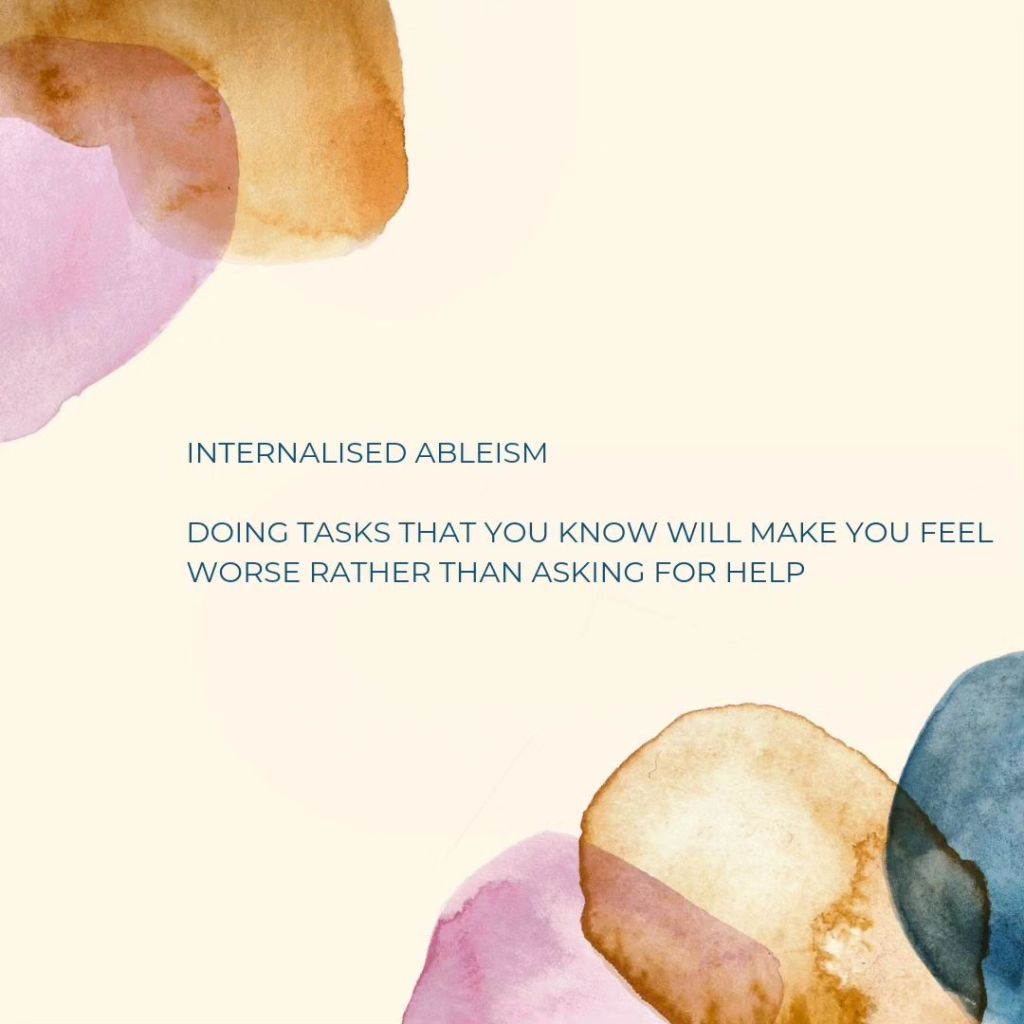
Undoing my own internalised ableism is a personal path I am currently on. It is not an easy process and there have been slips on the way already. But I don’t doubt I will be thankful for doing so.
 Dystonia and Me