Posted in Archive, May 2014

Alternative Coping Methods

Today is the last day of Dystonia Awareness weeks, which is most likely a relief to all the lovely people who are signed up to receive email alerts when I post a new blog as I’ll be going back to posting a couple of times a week. It has been amazing seeing how many people have joined in with Dystonia Awareness week, Thunderclap was seen by over 6 million people which is incredible!

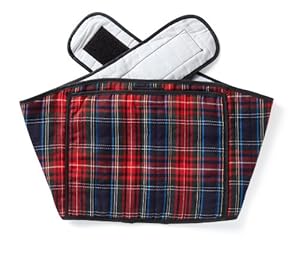
In many of my blog posts this week I have mentioned treatments such as Botox injections, muscle relaxants and Deep Brain Stimulation, however none of these treatments can guarantee relief and are not always accessible, so I wanted to discuss some alternative ways of coping with symptoms. Heat is great for relieving muscular aches and pains that can result from spasms, wheat packs, back wraps and microwaveable slippers are all great products and I use at least one of these three several times a week. TENS machines are also great, I don’t know what I’d do without these. I never go anywhere without one in my handbag and towards my Botox dates they often help keep my neck spasms bearable.
If you can afford alternative therapies I would highly recommend trying Reflexology. I found before having regular treatments that I could not sleep well at night as the spasms would keep me up. This turned into a vicious cycle as I was then too tired to handle my spasms well in the day. Now I find having regular Reflexology treatments enables me to have several good nights of sleep a week which does me the world of good as it means I can handle whatever my body throws at me in the day better. I also find burning scented candles or essential oils helps me relax (and after putting them out) get to sleep easier.

Everyone finds something different that will help them, for some people touching certain pressure points will relieve spasms to a certain extent, in others hot or cold therapy does. For me as I mentioned above heat, TENS and Reflexology are what keeps me ticking along in between Botox appointments. Its worth experimenting and trying to work out if anything particular helps you.
Posted in Archive, May 2014

Dress for Dystonia

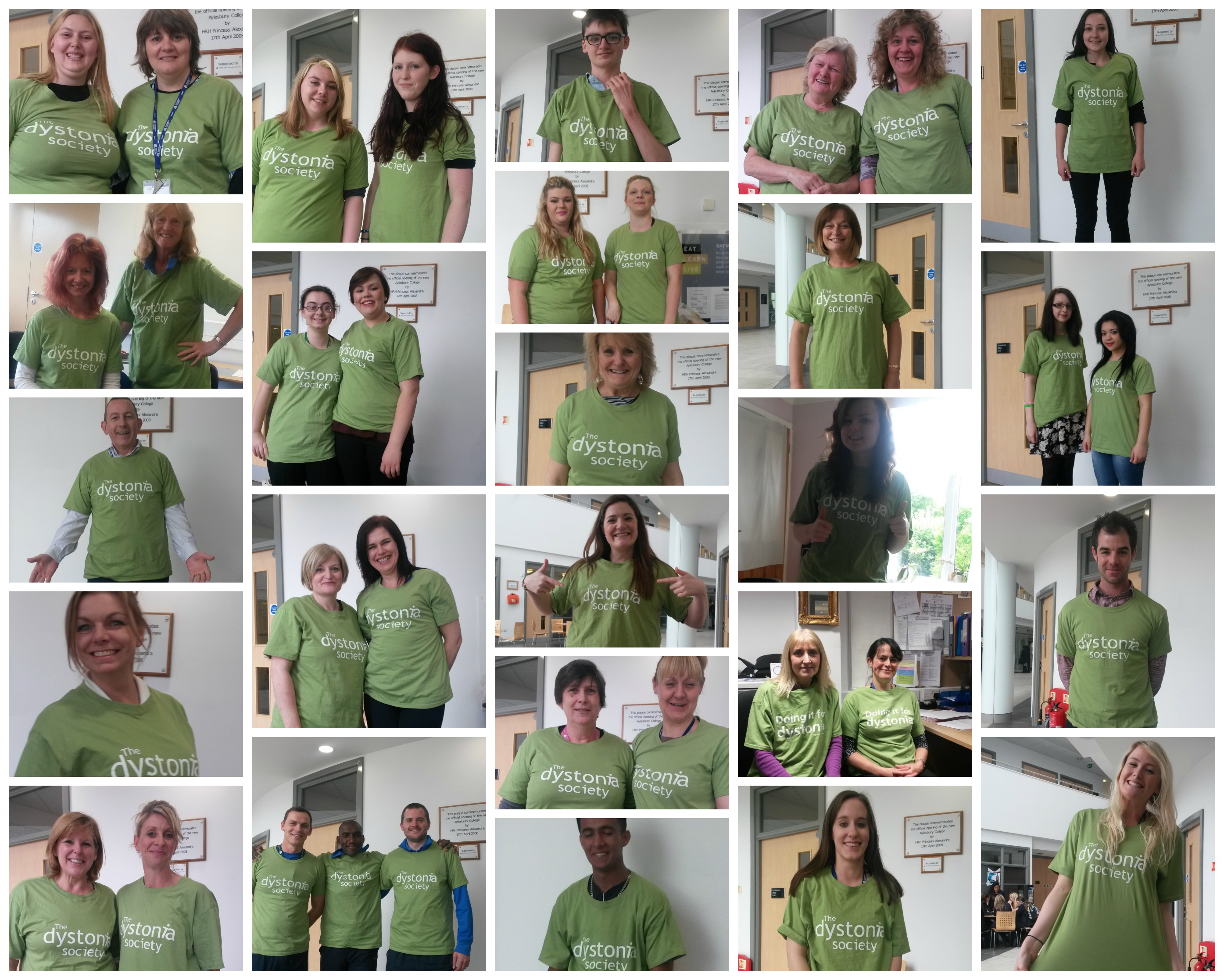
As I mentioned the other day I did some fundraising and campaigning at my college this week to raise awareness of Dystonia. On the Dystonia Society’s website they have a list of fundraising ideas one of them being Dress for Dystonia. This title inspired me. I encouraged both students and staff members of the college to get involved with my awareness raising campaign by putting on a Dystonia Society top. This ticked off two awareness ideas at once as the tops are green and it was twist on the Dress for Dystonia idea. Everyone who put on a top posed for a photo which I put into an awareness photo collage. Lots more people were willing to get involved than I expected which was great! The college have even done a news article on it and put it up on their website which is amazing as this too provides more awareness of Dystonia. Image

Posted in Archive, May 2014

Raising Awareness

Raising awareness of Dystonia is vital. The Dystonia Society’s website says that an estimated 70,000 people in the United Kingdom have the condition. Considering just how many people this is, it is still such an unknown condition to both the public and the medical society. By raising awareness and funds more research can be done. Dystonia may not be life ending but it is life limiting. Without research there is no improvement in treatments for the condition and there is no cure.

When I became ill with the condition I had never heard of it, I had lived my life blissfully ignorant. Now it’s fast approaching the two-year mark of my being ill. Dystonia may have taken away many things from me but it has also inspired me. The only way change will happen is if we bring it around. We can sit and moan about Doctors not understanding the condition all we like, but what difference will that make? By actually having the condition and experiencing it we can choose to empower ourselves with knowledge and spread awareness.

I spent yesterday sat in my College canteen raising money and awareness for Dystonia. The age range of students at the college is from 16 to mature, yet all no matter how old or young were prepared to listen to what I had to say and asked lots of questions. I went with lots of leaflets that The Dystonia Society had provided me with and every single one of them got taken by people wanting to go away and read more.

Awareness is key to a cure being found and weeks like this one are the perfect time to do it. Tea parties, joining in with campaigns like the Go Green for Dystonia  one or getting involved with Thunderclap, are all so easy but so effective!! Dystonia Awareness Week is not over until the 11th May, so if you’ve not joined in yet, why not now, every voice counts! https://www.thunderclap.it/projects/9777-dystonia-awareness-week

Posted in September

Cervical Dystonia

Cervical Dystonia is when the spasms are in the neck, this can be quite painful and can result in awkward neck postures.Generally the spasms will cause the head to pull to one side, backwards or forwards. In my case my head pulls down towards my left shoulder but with a forward twist. I also have a no style tremor to my neck. It is the most common form of Dystonia and according to The Dystonia Society is currently estimated to affect around 18,000 people in the UK. Like most forms of Dystonia if it occurs in adulthood then it will hopefully remain in just that part of the body.

The most effective treatment for Cervical Dystonia at the moment is regular Botox injections, though how well this work varies from sufferer to sufferer. I receive regular Botox injections to both sides of my neck and it has had a massive impact and helps me keep my head fairly straight  whilst the Botox is working. Medications such as muscles relaxants can provide people with some relief as well. Pressure being applied to specific points around the neck and face in some people is beneficial but this is not the same for everyone.

This image demonstrates some of the positions the spasms can pull the head in to.

Posted in Archive, May 2014

Leg/foot Dystonia

Instead of working steadily down the body for my blog posts I decided today to go straight on down to the leg/foot. This may have been influenced by todays spasms. For me, I class my leg/foot spasms as one of my most debilitating symptoms as it has resulted in me being unable to walk and having to use a wheelchair. In young adults and children Dystonia in the leg/foot area can be a sign of generalised Dystonia. Whereas for older adults (usually 30+ ) it would be more likely that it would be just in that area, this is known as focal Dystonia. I used to always walk funny, often falling over, and kicking my ankles open. I would often say “my legs just won’t do what I want”, at the time it was laughed off but now I often wonder if this was the first sign of the condition.

Dystonia is currently not a curable condition, therefore treatment is focused more on managing the current symptoms as well as possible. The most effective treatment at the moment involves regular Botox injections, where the injections are given depends on the spasm. Some people find that they need a combination of medications such as muscle relaxants as well as Botox injections . Physiotherapy is thought to be of use as well in a number in a cases, this is something I am starting to try along with Botox and muscle relaxants.

 Below are two photos of my foot/leg spasms.

Posted in Archive, May 2014

Oromandibular Dystonia

Oromandibular Dystonia affects the mouth area, this includes the tongue, jaw and lips. It is part of my Generalised Dystonia and I find it affects both my jaw and my tongue. I have often found myself in situations where I have found myself sounding like I am drunk because I am unable to pronounce my words due to the spasm going on in my tongue.

Oromandibular Dystonia often affects the sufferers ability to chew and speak. When my spasms are bad I find that I can only consume liquified foods and yoghurts, as the spasms that are taking place leave me unable to chew. Some people may just have Oromandibular Dystonia or they may have it with Blepharospasm (Eye Dystonia), or as part of Generalised Dystonia like myself. If it is a focal Dystonia (just on its own) then it normal appears between the ages of 40 and 70.

Oromandibular Dystonia was one of my first symptoms. I was at university, and to be honest I didn’t really think too much of it at first, but then when the spasms became extreme and caused my jaw to dislocate I began to realise just how much pain they could inflict. As there is no cure for Dystonia a combination of Botox injections and medications are used to manage it. I find Botox injections to be particularly effective at managing it. Botox seems to only work for around 5/6 weeks for me, luckily I have a very lovely neurologist who is willing to administer the injections every 6 weeks. This works fantastically well for me, as without this my jaw spasms are extreme. Some people find pressure points or chewing gum helpful in managing their symptoms.

I would highly recommend for anyone wanting to know more on the condition checking either out The Dystonia Society website http://www.dystonia.org.uk/index.php/about-dystonia/types-of-dystonia/mouth-or-tongue-dystonia or The Dystonia Research Foundation http://dystonia-foundation.org/what-is-dystonia/forms-of-dystonia/focal-dystonias/more-on-oromandibular-dystonia .

Posted in Archive, May 2014

Blepharospasm

Blepharospasm is a type of Dystonia that affects the eyes. These spasms are often rather painful and can involve the eyelids as well as the muscles behind and around the eyes. As with all types of Dystonia people experience different types of spasms, some people have increased sensitivity to light and rapid blinking, whilst others find their eyes spasm shut, and in some cases the muscles behind the eyes pull the eyes up into the head making the person functionally blind. I experience several of these spasms and find that the sensitivity to light often triggers the other spasms.

Generally speaking symptoms usually appear in people around the ages of 50 to 70. However it does affect younger people, Blepharospasm can appear on its own or in conjunction with or part of other Dystonias such as Meige Syndrome or Generalized Dystonia. Blepharospasm is thought to affect around 7,000 adults in the UK.

There is currently no known cure for Dystonia. Treatment for Blepharospasm normally involves regular Botox injections. I find that six weekly injections around my eyes helps with symptoms such as spasming shut and rapid blinking, but the muscles behind the eyes cannot be injected. By wearing dark sunglasses in the sunlight or in brightly lit area, I can reduce the chances of going blind but it still happens. The longest this has ever happened for is 15 hours. Some people find that pressure points around the temples, and nose area can help relieve the spasms. Obviously these pressure points differ from person to person.

In the picture below you can see my eyes pulled back in a spasm leaving me functionally blind.

as

The Dystonia Society’s website has some great tips on how to cope with the condition so head on over to it to find out more http://www.dystonia.org.uk/index.php/about-dystonia/types-of-dystonia/eye-dystonia-

Posted in Archive, May 2014

Dystonia Awareness Week

From today to the 11th of May is Dystonia Awareness week! To celebrate it and help spread awareness I have taken apart in the Go Green for Dystonia campaign. I decided that I would do this in a similar way to last year and have dyed a section of my hair green for the week (luckily it will wash out quickly).

Photo: Green streak in my hair and wearing green for Dystonia awarness week.

I have a of couple awareness activities planned for this week besides being part of the Go Green for Dystonia Campaign. The first of my awareness activities is to do a blog every day, minus today’s entry I plan for each one to focus on a different aspect of Dystonia and how they can impact on day-to-day life. On Wednesday I am running an Awareness event at my college which I am really excited about, it’ll be a fantastic opportunity to educate lots of people on the condition and raise a bit of money for The Dystonia Society.

I have also signed up to Thunderclap, which is something all of you lovely readers can get involved with too! Thunderclap sends out an awareness message via your Facebook/twitter/tumbler (depending on what you choose) at 1:30pm on May 9th. It’s a great way to spread the word about Dystonia. Even Stephen Fry has signed up for it! If you would like to join in here is the link https://www.thunderclap.it/projects/9777-dystonia-awareness-week.


Posted in April 2014, Archive

Disappointed & Disheartened

Yesterday I had my appointment up in London with my neurologist. I had been really looking forward to this appointment, as I wanted his opinion on a couple of things. Firstly on my new leg spasm and if there was any treatments he could suggest that could help it. I am taking 45mg/ml of Baclofen a day for it and whilst this is controlling it, it impacts my cognitive ability greatly. I am able to hold a conversation but anything that requires me to start actually using my brain and answering questions is too much and I am unable to do so, I end up relying on my mum or whoever is with me at the time to do so for me.The second thing I wanted his opinion on was on a type of splint that my physios are arranging for me to try called Second Skin. It’s a lycra based splint that provides  feedback to the brain, and it seems to work either really well or not at all.

For my leg he had no idea what to do other than keeping me on the Baclofen.  He is referring me for more intensive physiotherapy to see if that will help but other than that he was lost for ideas. So I guess all we can do is hope that these new splints when I try them work, because otherwise I do not know what to do. In regards to the splints he did not say too much, he said they could do no harm which is always good to know and that they may help but didn’t say much more on the subject.

The main reason I had been looking forward to yesterday’s appointment is that in a letter I had received from my neurologist the other week he had stated in it that he hoped to have an answer for me about my IV treatment for Neurological Lyme Disease by the time he next saw me. I took this as a positive statement when I read it as recently in conversations with my doctors it had all been looking like it could go ahead if someone could be found to oversee it. Sadly this is not this the case. The hospital that originally said this can be set up if you find a neurologist to oversee it, is now saying they want more evidence that I have Lyme. By evidence they mean a positive Lumbar Puncture result.

My neurologist has said that he can arrange for me to have a Lumbar Puncture very quickly and it is up to me whether or not I agree to go through with it. He is not very happy for me to have one done as it puts me at risk of developing new symptoms or my current symptoms getting worse. There is also the problem that I cannot actually guarantee I can stay still due to body spasms so for them to realistically be able to do the Lumbar Puncture I would have to be under a General Anesthetic. The tests for Lyme Disease are also extremely unreliable giving false positives and negatives, and with a years worth of oral antibiotics in my system its more likely to come back negative.

I started taking oral antibiotics for Neurological Lyme Disease this time last year, and we have battled for the correct treatment which is IV antibiotics for the last year. For a whole year I have been put under the impression that I would get IV it would just be a bit difficult to set up. Now I am extremely upset. All I have done since I left the hospital yesterday is cry on and off. The IV would not cure my Dystonia but it would cure my Lyme, and who knows how much of my body is that! I had all my hopes pinned on this!! I am terrified that now when they take me off my oral antibiotics, which I know will happen soon, that my symptoms like my hand spasms, that improved may come back. I could not cope with that!

My plan today is to phone a local private hospital that I know treat Lyme Disease and see if they will consider treating me without the Lumbar Puncture. If they won’t then I will have the Lumbar Puncture done as I would rather risk it and hopefully get treated then spend my whole life wondering what if I had done it.

I am feeling very lost, and sad right now and I know things can only get better. It’s just hard after spending a whole year having all my hopes pinned on this treatment to have it snatched away. On a positive note I did get my injections done, and he was so lovely and apologetic. I am lucky that I have him. I  just have to struggle on.struggle


Posted in April 2014, Archive

London Marathon 2014

Last Saturday my family and I went up to London to watch my cousin David and his lovely friend Sam run the Marathon to raise money for the Dystonia Society. It was such an amazing day. We were extremely lucky with the weather, and managed to get a fab viewing spot at the halfway mark. This was perfect as not only did it enable us to have a great view of everyone but it also meant we had a chance to grab David as he ran past and take a quick photo with him.

I’m thrilled to say that David and Sam have achieved their sponsorship target and have raised over £3000 for the Dystonia Society which is just incredible.  I had never met Sam before so it was fantastic to finally meet her at the celebratory dinner. Watching them run was so emotional and inspirational and I extremely thankful to them both for taking on such a huge feat.