Posted in Archive, December 2020

Life alongside Complex Regional Pain Syndrome

Complex Regional Pain Syndrome (crps) first appeared in my life back in February 2006. I was 16, in my GCSE year and had just had my appendix removed after a gruelling week on the adult inpatient ward being poked and prodded by consultants. Whilst they ummed and erred over whether or not to operate I would be given morphine injections into my thighs. A seemingly normal procedure which resulted in any semblance of normal vanishing in to the fire of nerve pain.

Around a week after discharge I was back in A&E having my leg x-rayed. Despite mine and my mother’s instance that it couldn’t be broken as I had barely walked due to the pain in it; so there’s been no fall, twist or bang to break a bone. Instead I was living in shorts unable to bare touch upon my skin, I was walking on my tip toes and every movement was agaonizing. This time I was admitted to the children’s ward after they’d established no break and the whispers of crps emerged.
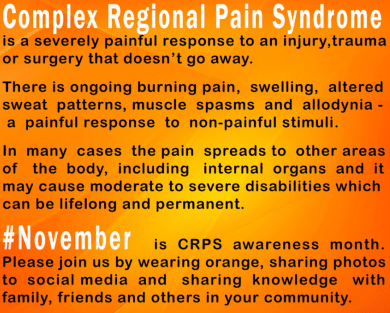
Crps info

My leg deteriorated rapidly to the point it was in a fixed dystonic position (not that anyone explained that at the time) I could not bare any sort of touch and felt like I was being burned constantly. I can vividly remember one day where the pain was so bad I was screaming for them to put my leg out; my brain so convinced that it must be on fire, despite my eyes seeing otherwise. They ended up sedating me with diazepam to help.

My stay on the children’s ward was not a short one. I was there for a total of six months, studying and completing my GCSEs and undergoing intensive physio therapy. I couldn’t be more greatful to the physio team. They impressed on me the importance of desensitisation of the leg. This essentially meant running different textures up and down my leg multiple times a day to reprogram the nerves to recognise that it wasnt a painful stimuli, we used things like make up brushes, sponges etc. The turning point though was when they introduced hydrotherapy into my treatment. I would be hoisted into the pool and spend the session pretty much holding the side for dear life trying not to scream to loudly. It was traumatic and still makes me want to cry thinking back on it but I am so glad that they kept me going with it. There is no doubt in my mind that it was the best desensitisation treatment.

My leg now can bare clothing and shoes, I don’t scream out when we go over bumps in the car or if there’s a windy day blowing my clothes. For the most parts the symptoms are there but quiet, only roaring their disabiling heads when I do something foolish like walk into a table edge, or spend to long on that side at night. The Dr’s told us they were fairly certain the morphine injections were to blame and I’ve refused all leg injections since.

Part of my Dystonia treatment involves three monthly injections. In 2015 following my usual jabs I found myself at the Dr’s being diagnosed with crps once again, this time in my right shoulder. I was struggling to wear clothes and move my arm. Thankfully we knew from last time how to act and I arranged hydrotherapy straight away and started my old desensitisation routine again. I still struggle to wear a bra, it causes immense burning but I force myself to for as much of the day as I can bare. Every 12 weeks the area is injected again and I have a flare up. It’s shattering but I take comfort in knowing that the desensitisation methods bring it back to a tolerable level

There’s a lot yet to be understood about this condition but to anyone who is suffering please remember you are not alone and my facebook page inbox is always open.
Posted in Archive, July 2015

Hydrotherapy

Today I had my first Hydrotherapy session, this was the first in a course of six. This morning I found myself feeling a mixture of emotions. Part of me was incredibly excited, I previously had hydrotherapy back in 2009 to treat Complex Regional Pain Syndrome, and found it to be very helpful, so I know just how beneficial it can be. However I was also slightly nervous, I could not help but wonder how my quirky body would react to the therapy now. Would it set a seizure off? And if it did how quickly would the staff react? The one positive being, if I had a seizure, that the hydrotherapy takes place at my local hospital and the A&E staff know me very well.

The session could not have gone better. The pool was wonderfully warm which helped relax my rather achy muscles. Having the water support my joints whilst I did the exercises was great as while the water in itself provided a challenge, it also meant I could not hurt myself. For example whenever I twitched in the pool the water provided a resistance to my arm, slowing it down slightly and supporting it, which meant I didn’t hurt myself like I normally do. We had lots of laughs during the session, with my spasms ending up with me splashing my physio repeadedly in the face, and the floats that we had been using during an exercise going flying across the pool. It was great for it to happen in a safe, pain free enviroment!

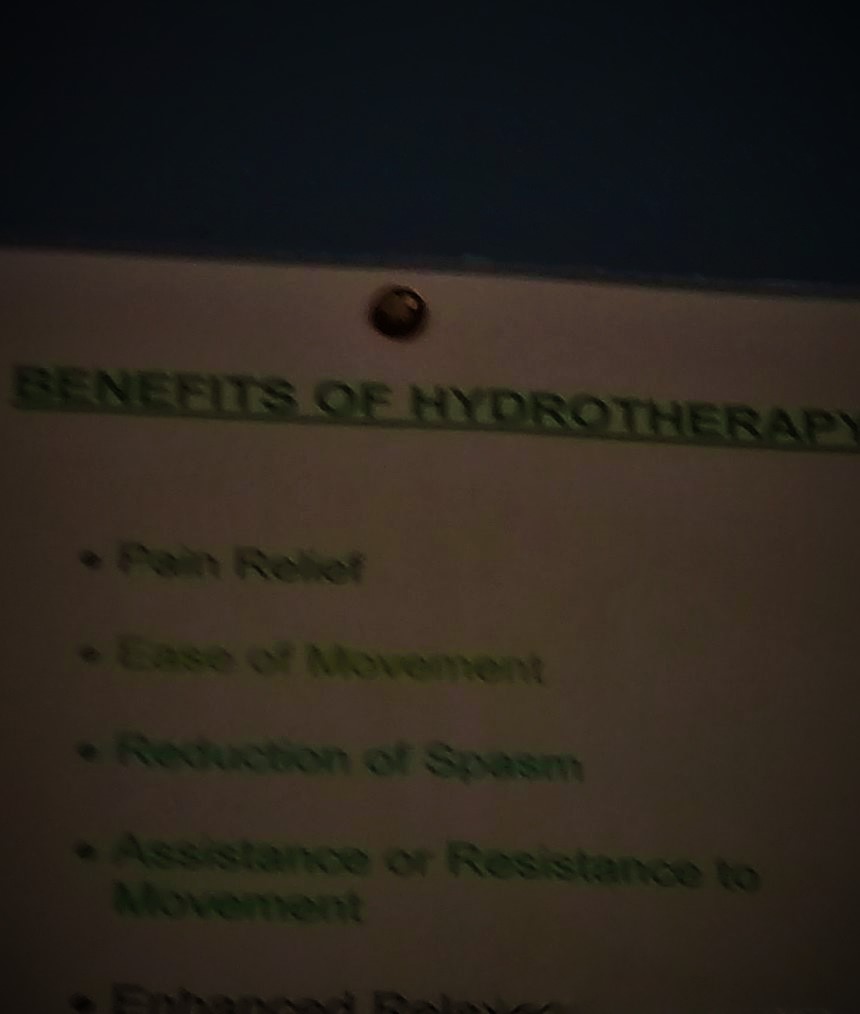
Below I have put a sneaky photo (I was trying to avoid capturing other patients) that I took at the hospital earlier, it lists some of the benefits of Hydrotherapy. This includes pain relief, and reduction of muscles spasms. It shall be interesting to see if it will help with the spasms I experience! If you have had Hydro, feel free to drop me a line I’d love to hear your experiences.
11778988_739474566178325_838772252_o

Posted in October

Musings on my upcoming treatment

Back in 2009 I was admitted into my local hospital with Complex Regional Pain Syndrome in my right leg. I stayed in hospital for a total of six months and still suffered with the condition for a few months after that. The condition meant that despite the fact that I could see my leg so I knew it was there, I didn’t feel like I was connected to it. It would change temperature, colour and sensations. I could not bear even the touch of clothes, and was not able to move it. As a result I had intensive physiotherapy and Hydrotherapy, which thankfully worked a treat for me. I had to learn to move my toes/leg/walk again and retrain my brain to understand that the floor or clothes etc. were not actually harming me.

Due to what I went through with the Complex Regional Pain Syndrome, I can understand how/why my Neurologist has recommend an intensive physiotherapy and rehabilitation treatment plan. I completely get how it will hopefully (fingers crossed) help with my symptoms in my arm and leg. What I am curious about is how it will help with my facial spasms and eye spasms!

When I had intensive therapy before, I basically had to bombard my nerves constantly. I was given exercises to do every hour (in the day) if the physiotherapists were not with me. This meant standing and putting my foot on the floor or running brushes up and down my leg etc. They were all extremely painful but it was by forcing myself to do this constantly that my nerves resumed normal activities. I am expecting that my upcoming treatment will be similar, I am presuming that I shall be made to do movements/activities that will bring on a spasm repeatedly in an attempt to retrain my brain. To me this makes sense, however with my facial spasms they tend to be pretty random, though sometimes I feel this has something to do with eating. Again my eye spasms are random and vary between the length of time they last, with the shortest being seconds long and the longest being 15 hours.

I know that I cannot get any answers to my musings until I am there and taking part in the treatment programme, but I am so curious! The whole disorder intrigues me so much. The human body is such an incredible thing, and although we know so much about it, when it comes to the brain we know very little. New things are discovered all the time, and each new discovery allows for more research to be done. We learn more and more each day. I may not even get the answers during my treatment. One small thing could trigger another. I can’t wait to see what my treatment plans does for my dystonia! Its a big unknown but hopefully one with a positive outcome.