Posted in Archive, May 2016

Dystonia: Who am I now?

There are many aspects to life with Dystonia; to address them all would take hours. So I’m going to focus on just a few this evening. As with any condition, once you are diagnosed, many sufferers go through a soul searching period. This is simply trying to work out who you are now. Inevitably we all change, for better or worse, once a chronic condition develops. You’re still the same person, just with a few modifications.

At eighteen I was a Student Midwife. There was not a lot else that made me who I was. I was a daughter, girlfriend, and student. I felt fulfilled. If you had told me then that in less than a year I would be unable to practice midwifery I would laughed. Midwifery was my passion, to even entertain the thought of another career seemed ludicrous. I could talk about the subject until I had grossed people out enough that they were begging me to stop! Now at 23 I am a daughter, student, freelance writer, blogger, reflexologist, advocate and Spoonie. Midwifery is but a happy memory that still brings a tear to my eye. I put up with less drama, I have no patience for anyone who only wants to be around during the more upbeat moments of my condition, and I am a hell of a lot stronger than I used to be.

It has taken four years to get to this stage. I have gone through denial: refusing to acknowledge that my illness won’t just disappear. I was so lost in this that I even reapplied and was interviewed to go back to study Midwifery. A small moment of madness in reality. I have grieved for the person I was, and that life that I lost. I have floundered in uncertainty, whilst those around me helped keep me from sinking into waves of despair. Now I finally have accepted who I have become. Despite everything I have been through, and am still going through, I am happy and thriving.

There are still days when I question why I have experienced the things I have. Only last night I was joking that I must have been a dementor in a previous life, for why else would I be sentenced to this path? Melodramatic I know, but it doesn’t make that feeling any less. Despite my illness I have no regrets. I am surrounded by people who love and support me every time I fall. Through my Dystonia I have had the opportunity to meet and talk with a number of individuals who I admire greatly. I have made many new friends. I have contacts around the globe! At the end of the day, I am happy. I cannot ask for anything else.

Posted in Archive, May 2016

What Causes Dystonia?

Currently the exact cause of Dystonia is not known; though a number of problem areas have been linked to the condition. Research has shown that there is a fault with a section of the brain called the basal ganglia. It is only in a small minority of sufferers that the condition has a clear cut cause.

Dystonia can appear on its own, secondary to another medical issue or as a result of medication – this is known as Tardive Dyskinesia. At the current time 80% of children diagnosed with Dystonia have it alongside a primary condition for example Cerebral Palsy. In adults the condition can be caused by a stroke and other neurological issues.

As research is progressing more genes are being found to be related to different forms of the condition. Studies have found that some cases of Generalised Dystonia are hereditary. However even if there is a genetic issue it does not guarantee that you will pass on the condition. It is thought that there is between a thirty to fifty percent chance of a child inheriting Dystonia depending on the mutated gene and type of Dystonia. So far over 20 genes have been identified in relation to Dystonia, with more being found all the time.

For more information on the genetic links to Dystonia I recommend http://www.dystonia.org.uk/index.php/about-dystonia/causes/is-dystonia-inherited

Posted in April 2016, Archive

So What Is Dystonia?

In the United Kingdom it is estimated that at least 70,000 people suffer from Dystonia. Despite being the 3rd most common neurological movement disorder many people have never heard of it. The word Dystonia describes uncontrollable muscle spasms which are caused by the brain firing incorrect signals to the muscles. There are many types of Dystonia however, and no two types present exactly the same. The incorrect signals can cause the body to take on abnormal postures, tremor, contort and more. Many GPs will not see the condition during their practising career which can make knowing when to refer for a diagnosis difficult. Many sufferers go years before diagnosis occurs.

The condition is incurable and a tricky one to treat. Whilst many people manage to live full lives with appropriate treatment, this fact does not lessen the impact of the condition. A task you may be capable of preforming one day you may be unable to perform the next. If the condition appears in adulthood, in the majority of cases, it will remain contained to this area – this is known as focal Dystonia. However typically if the condition appears during childhood it generally will spread across numerous parts of the body -Generalized Dystonia.

Obtaining a diagnosis and receiving treatment can make a huge difference to a person’s quality of life. Without treatment I would be unable to see consistently, I would struggle to communicate due to jaw spasms, my head would be lopsided and my arm would be uncontrollable. Due to lack of awareness reaching the necessary professionals diagnose can be difficult, which is why awareness week is so important; increased awareness will not only help improve diagnosis times but can lead to more funding to find a cure.

Are you doing anything for Awareness Week? If so get in touch and let me know.

13120414_890520791073701_1045528161_o (1)
Green for Awareness Week
Posted in Archive, March 2016

3 Weeks Rehabilition Program

After a year and a half of waiting tomorrow I am being admitted into The Royal National  Orthopedic Hospital Stanmore for intensive rehabilitation for my Ehlers Danlos Syndrome Type Three. I am a mix bag of nervous and excitement. From talking to previous inpatients  of the program it sounds extremely positive and successful. There are many different components to the rehab, such as hydrotherapy, physiotherapy, pain management and sessions with psychologists. On the most part I am very optimistic, my consultants all feel that the treatment should offer significant improvement.

The only part of the program I am wary about is the psychology sessions. If I could opt out of these I would.  Now I shall be sensible and fully cooperate with them but I can’t help my reluctance. I have had years of sessions with varying types of psychologists. Since I have been ill I have had specific sessions with cognitive behavioral therapists to attempt to control my seizures, however out of the three therapists I have seen only one has looked at me holistically. Due to this my file now contains a note from my neurologist instructing therapists not to focus on my past and informing them it has no impact on my medical situation. Click on  VLOG and blog for more info. However, many therapists choose to ignore this. Whilst I am sure the psychologists I am going to be seeing over the next few weeks will be lovely, I worry that they will be like the many I have seen before.

I get admitted at 8:30am tomorrow morning, so it’s not long to go now. My neurologist is convinced it will make a huge difference to my jaw and I’m keeping my fingers crossed he is right.

Posted in Archive, October 2015

Winter Precautions

If you had sat opposite me and my friends on the bus yesterday chances are you would not have had a clue there was anything wrong with me. When I shuddered, and my friends asked in hushed tones if I was cold, you would not have paid a second thought to it. In reality that shudder was my body trying desperately to twitch but failing due to the injections, my friends whispered question was simply because they know that the cold aggravates my Dystonia. I currently walk around Oxford like a human marshmallow, swaddled in layers, with my gloves, hat and scarf on. My joints are already painful most days. I compensate for this though, my bedroom generally feels like a sauna.

Winter is coming. For many Dystonia, EDS and other spoonies winter impacts their chronic illness, causing spasms, pain flares etc. Managing your symptoms gets harder and if you’re anything like me and run head first at every challenge your condition presents, then you’ll find that with winter you’ll crash and flare more often. Symptom diaries are a fantastic tool to keep. Learning what you can do to keep on top of your health is the best approach you can take.

I know that in winter If I go out with no gloves and only one pair of socks, I am going to spend the day apologizing to all the people I pass in the street as I’ll accidentally hit  them when I twitch. It’s humiliating, and avoidable if I just remember to wrap up. If my room gets to cold I know I shall spend the night in agony with my body spasming. Again this is avoidable. I may not be able to prevent every single spasm, but I can definitely prevent the worst of them by taking sensible measures.

So please all you amazing spoonie warriors, wrap up this winter and don’t put yourself at risk!

Posted in Archive, March 2015

Word Search

I’m the sort of person that words come easily to, whether that’s verbally or written. I may pause to search for a word once in a while if my brain fog is bad, but normally I’ll pluck another out to replace it. It’s an unusual scenario when I feel so completely stumped and unable to find one to suit my needs. Yet for the past week that’s exactly how I have felt. I’ve tested every word I can think of, yet none quite fit. Which makes trying to describe the situation I’m in now difficult.

When I saw my neurologist last Wednesday, he decided to add Botox injections to my shoulder to see if this would help control my twitches. This has helped beyond my wildest imagination. At first the pain that followed I put down to my body reacting to the injections, after all I do experience similar pain in my neck each time I get my injections. However unlike my neck, the pain has not improved, even lying down at night is painful. Consequently sleep is almost non-existent . Carrying things, anything touching my shoulder is extremely uncomfortable. I don’t feel like pain is the right descriptive word however, though it most definitively applys the majority of the time, I don’t know how to verbalize the sensation that I am experiencing. It is so uncomfortable and is setting my teeth on edge as it is constant. Hopefully it will ease off soon.

On a more positive note I have attached below the photo below that I promised of me standing.

Posted in Archive, September 2014

Excitement and Nervousness

Living with Dystonia and my other medical conditions guarantees that no two days are ever the same. I learnt that a long time ago. Yet two years into it it and it can still shock me. The difference in me when you compare last Sunday to today is astounding! Last Sunday feels like a life-time ago, not a mere week. Last week I was confined to my bed all day, so ill that a member of my family was with me all day, today I am pretty much pain free, hardly spasming and enjoying every second of it.

Last week it was as if we had taken me off all my medications. I was blind, every part of me was spasming. My jaw spasmed to the point it eventually dislocated! There are not words to describe the pain I was in, or the pain caused by attempting to swallow pain killers and muscles relaxants whilst in that state. At points the only way I was able to communicate to my mum was by twitching a finger to let her know I was conscious but my body was out of my control. It was hell. I have not had a day that bad in such a very long time.

Today I have no pain medications in me, I am able to move about without setting another part of my body off. The only parts of me that are daring to play up are my neck and jaw. This is not surprising as my Botox injections are due Tuesday. However considering that fact I am feeling extremely happy and lucky that they are not spasming more than they currently are. Its as if Benedict is still recuperating from last weeks attack.

I have started treatment for my Chronic Neurological Lyme Disease now. It shall be extremely interesting to see which of my spasms were due to the Neurological Lyme, and which are caused by the Dystonia. Hopefully over the next few weeks I shall start to see improvements and get an idea of what spasms I shall have to live with and which ones I don’t. I’m extremely excitement but nervous!


fff

Posted in Archive, May 2014

Blepharospasm

Blepharospasm is a type of Dystonia that affects the eyes. These spasms are often rather painful and can involve the eyelids as well as the muscles behind and around the eyes. As with all types of Dystonia people experience different types of spasms, some people have increased sensitivity to light and rapid blinking, whilst others find their eyes spasm shut, and in some cases the muscles behind the eyes pull the eyes up into the head making the person functionally blind. I experience several of these spasms and find that the sensitivity to light often triggers the other spasms.

Generally speaking symptoms usually appear in people around the ages of 50 to 70. However it does affect younger people, Blepharospasm can appear on its own or in conjunction with or part of other Dystonias such as Meige Syndrome or Generalized Dystonia. Blepharospasm is thought to affect around 7,000 adults in the UK.

There is currently no known cure for Dystonia. Treatment for Blepharospasm normally involves regular Botox injections. I find that six weekly injections around my eyes helps with symptoms such as spasming shut and rapid blinking, but the muscles behind the eyes cannot be injected. By wearing dark sunglasses in the sunlight or in brightly lit area, I can reduce the chances of going blind but it still happens. The longest this has ever happened for is 15 hours. Some people find that pressure points around the temples, and nose area can help relieve the spasms. Obviously these pressure points differ from person to person.

In the picture below you can see my eyes pulled back in a spasm leaving me functionally blind.

as

The Dystonia Society’s website has some great tips on how to cope with the condition so head on over to it to find out more http://www.dystonia.org.uk/index.php/about-dystonia/types-of-dystonia/eye-dystonia-

Posted in Archive, October 2013

Top Tips to Beat Cold Induced Spasms

The weather is getting colder and colder each day, and as my little Dystonia alien hates the cold and loves to spasms more I have been investigating different ways to keep myself warm, without looking like a marshmallow. I’m sure many of you know the feeling of when you have so many layers of clothing on, you begin to look less like a human more like a marshmallow. As I know many other Dystonia sufferers find the cold worsens their symptoms I thought I would share with you all my top three products that I have found helpful – and for those of you without Dystonia who are reading this, it may interest you as well, after all everyone likes to keep warm!

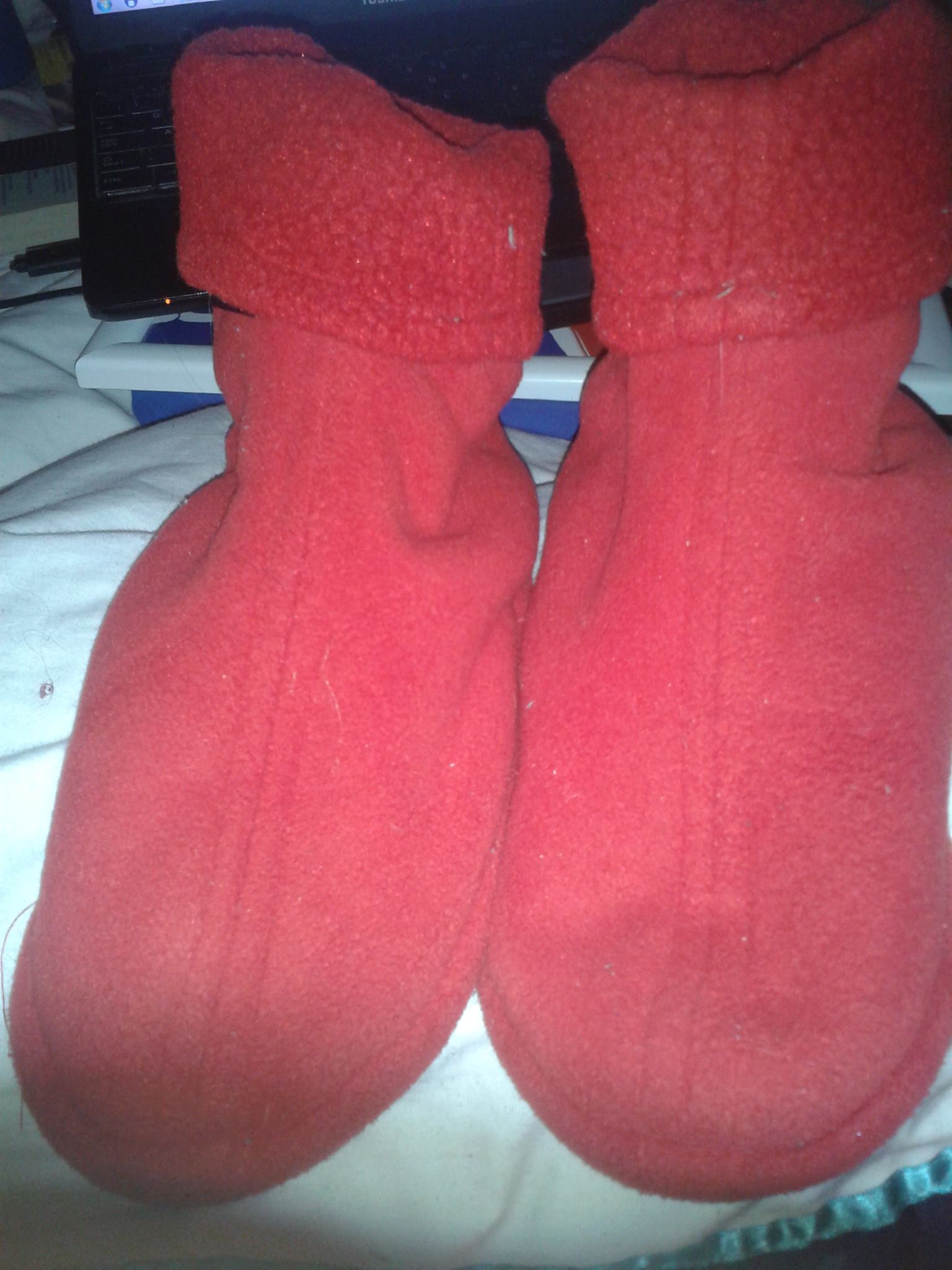
1) Tozies – I am one of those people who if my feet are cold the rest of me is cold. My reflexologist recommended I invest in some Tozies. Tozies are slippers which are double fleece layered, and without a hard sole on them. Not having a hard sole means I don’t worry about my spasms bending them out of shape. I have to say these are fantastic, I am actually going to buy a second pair, but this time  a microwavable version for the really cold winter nights that leave you shivering. I wear my Tozies constantly, some nights I even sleep in them, as I find if my feet are toasty warm then the rest of me does not feel as cold. If you want to check them out here is the link to where I purchased mine http://coziewarmers.co.uk/ladies-slippers-shoe-size-3-12-22-c.aspImage

These are my Tozies.

2) Reusable heat pads – are my second favourite method for warming myself up. They are pads with a metal bit in, they come in all shapes, sizes and colors. When you bend the metal an internal chain reaction is set off which warms the pads up and causes them to harden. The warmth lasts for several hours. I have taken to wearing these pads in my shoes under my feet and inside my gloves. To reuse them you simply put them in a pan of hot water for a minute to return them to their original state. It’s a cheap, but effective method.

3) Thermals – Now I know saying wear thermals is an obvious one, but in all honesty how many of you actually remember to put some on under your clothing? I purchased some thermal socks, leggings and vests, and make sure I always have at least one, if not all, of them on. I got my thermals fairly cheaply off marks and spencers (you could probably get them even cheaper if you shopped around). It’s an obvious, but often overlooked, step to keeping warm.

I am always searching for ways to keep warm, to avoid the extra spasms that the winter brings. I hope some of these ideas helps those of you who find the cold causes extra issues.


Posted in Archive, October 2013

A change in Tactic

So my body seems to have decided to change its tactic. Normally when I am in a lot of pain I have a Non Epileptic Seizure. The last two weeks or so my body has disconnected from certain parts of me or all of me, leaving me functionally paralysed. I have had a handful of seizures as well but the functional paralysis does seem to be my body’s main coping mechanism now.

I am in two minds about this change. On one hand I am happy that there has been a decrease of seizures, as it means I am conscious more often, not forgetting hours either way of the seizures etc. On the other hand the functional paralysis can be rather scary. The first time it really hit me I lost the connection to the lower half of my face for 7 hours. A big part of me knew it was just my body coping with pain, but a small part of me was terrified that something worse was at play such as a stroke. When the functional paralysis comes out to play I either disconnect for one to two minutes or I disconnect for hours. There is no middle ground.

As I type my right foot is in spasm. It felt like the force of the spasm was trying to break my big toe. I was in a lot of pain and was beginning to think that I should be sensible and shimmy down the bed a bit so that I did not hurt myself if I ended up having a seizure. However instead of seizing both my legs ended up functionally paralysed despite my left leg having no spasm in it at the time.

I am seeing my neurologist on Tuesday for my injections and a chat, so am going to add functional paralysis to my list of questions. I’m not sure if there is anything he can suggest to help but he may be able to advise something. I think I prefer my body coping this way but at the same time it scares me slightly.