Posted in Archive, July 2024

12 years of Dystonia


Twelve years ago, Dystonia turned my life upside down, marking the beginning of a long and complex journey. Losing one’s health is a challenge that many of us face, but it’s one that few are prepared for. Initially, my mindset was consumed by the desire to “conquer” Dystonia and return to my career as a midwife. This remained my focus for many years. However, more recently, I’ve shifted my perspective to prioritize living a fulfilling life alongside my Dystonia. This shift has not been without its challenges, as I’ve had to come to terms with the fact that some of my previous goals are no longer attainable. Yet, I’ve found this mindset to have helped my mental health

One of the most significant lessons I’ve learned over the past twelve years is the importance of self-advocacy. I’ve grown in confidence in my ability to effectively communicate with medical professionals and educate myself about my condition. This confidence has been crucial in managing my health  I’ve developed a passion for advocating for individuals living with Dystonia and promoting greater awareness about this condition. I believe it’s essential to shed light on the realities of living with a disability and the necessary changes that must be made to create a more inclusive society.

I highly recommend Dystonia UK to anyone seeking advice or information about Dystonia. This charity was a lifeline when I was first diagnosed, and I still frequently utilize their resources today.

Posted in April 2024, Archive

UK gov sick note proposal; ableist and stigmatising

In a recent move by the UK government, changes to the sick note process have been announced that have raised concerns among disabled individuals and their advocates. The changes are said to make the process more efficient and streamlined, alongside helping to further cut the welfare budget. A move that is not surprising by a government who have repeatedly penalised disabled persons over the last decade.

The new process specifically targets those with ongoing mental health concerns adding needless stress and stigma. Furthermore, the lack of accessible working roles for disabled individuals makes it even more difficult for them to return to work. Many disabled individuals face barriers in finding suitable employment due to discrimination and ableism in the workplace. This has become a more noticeable issue in recent months due to the focus on stopping remote work for many businesses. Without the proper support and accommodations, many disabled individuals are unable to work, this will result many being unfairly penalized under the new sick note process.

This move by the UK government is sending a dangerous message that disabled individuals are not valued or deserving of support. After the UN hearing recently on the violation of disabled persons human rights, it is disheartening to see further backlash against the disabled community. This runs the risk of  leading to further stigmatization and discrimination against disabled individuals, who already face many challenges in society.

The government must place more value on the account of  the needs and experiences of disabled individuals when making policy decisions. Rather than demonizing and penalizing disabled individuals.

The changes to the sick note process in the UK are worrying and ableist, and they highlight the need for more support and understanding for disabled individuals in society. Disabled individuals deserve to be treated with dignity and respect, and it is essential that policies are put in place to ensure their rights and needs are met.

Posted in Archive, February 2024

Discrimination In The Rental Market

In our recent search for an accessible home following being served with a S21 notice and my changing health needs, we have encountered a disappointingly high level of discrimination and prejudice. Finding an accessible property has proven to be a challenging and frustrating process, not because suitable accommodations do not exist, but simply due to the discriminatory attitudes of several estate agents/landlords we have encountered.

In both private and social housing sectors, we have faced barriers. Despite legal protections against discrimination based on disability, we have been told by multiple landlords that they do not accept wheelchair users or those who do not have traditional full-time employment. The scarcity of accessible social housing options only adds to the difficulty of finding a suitable living situation before our S21 expires.

What has become abundantly clear throughout this process is that the real obstacle we face is not my health or disability, but society’s unwillingness to make simple accommodations for individuals with disabilities. Accessible housing should not be considered to be a luxury but a basic necessity. Yet we find ourselves constantly met with obstacles and roadblocks. While there may be laws in place to protect against discrimination, they seem like empty gestures in the face of the everyday reality.

It is time for society to prioritize accessibility and inclusivity in housing and other areas to ensure that individuals with disabilities are able to live independently and with dignity. The current state of affairs is unacceptable, and it is up to all of us to work towards a more inclusive and accessible society for everyone.

Posted in Archive, February 2024

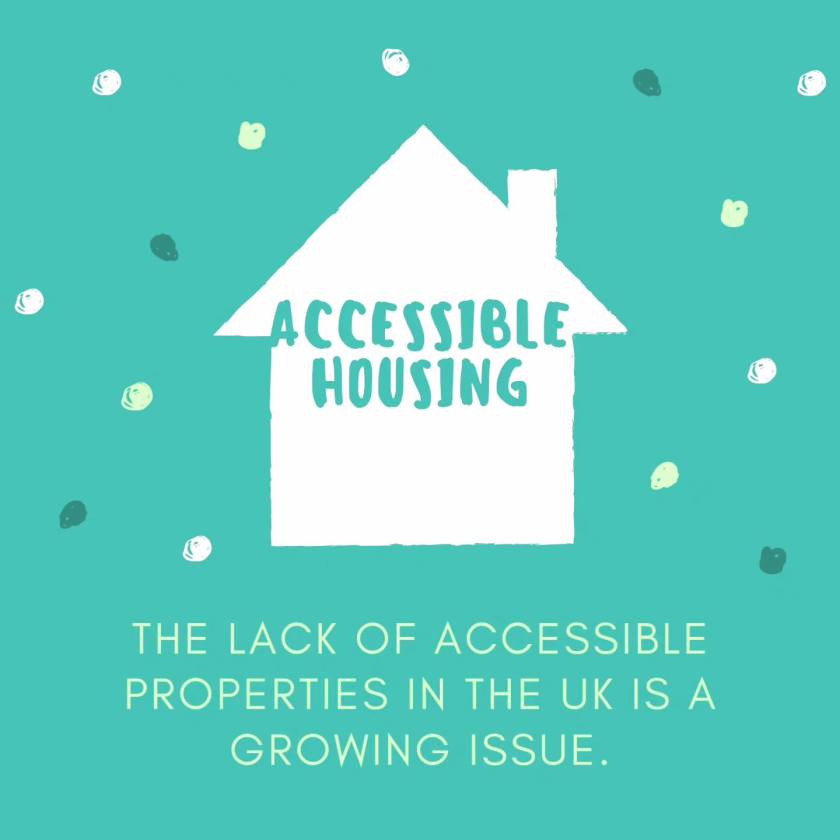
Accessible Housing In the UK

The distinct lack of accessible housing for disabled people in the UK is a glaring issue that is often overlooked. Despite progress in making buildings more inclusive, many disabled individuals/families, such as myself, still face significant barriers when searching for suitable housing in both the private and social sectors. Data published by the government in 2020 highlighted that only 9% of homes in the UK have key accessibility features (Association, June 2020). It is estimated that over 400,000 wheelchair users are left living in properties that are neither adaptable or accessible (Association, June 2020). In the area I currently live, a town based in Merseyside, it has been three years since a fully accessible family home last became available (information provided to me by occupational therapy), and to rent a bungalow it is nearly 3x our currently monthly rent.

One of the main challenges we are confronted with is the limited availability of accessible housing options. Many properties are not designed with wheelchair users or those with mobility impairments in mind, making it difficult for them to move around freely and independently in their own homes. This is an area that I struggle with every day. I can no longer share a bed with my husband as I cannot access our bedroom and have no alternative but to sleep in the living room. The kitchen and bathroom present their own complications, to attempt to access them results in damaging the door frames, there is no turning space, and I rely on others to help me to perform basic everyday tasks. This loss of independence takes a signficant mental toll.

Often disabled individuals and their families are forced to agree to a property that does not meet the requirements needed to be accessible, with the view that they then spend tens of thousands of pounds on making the necessary modifications e.g.installing a lift, creating front and back ramped access, widening door frames, creating level access bathrooms, lowering kitchen appliances etc. The cost of these adaptations very quickly add up, and while there is some funding available , the mounting costs often put creating an accessible home out of reach.

Even when accessible options are available, they are often in short supply, leading to long waiting lists and too high a demand for these properties. This lack of accessible properties in both the social and private sectors creates an ever-growing mountain of disabled people/families being stuck in unsuitable living conditions, and unable to find a home that meets their needs. This impacts multiple elements of the individual’s quality of life, their employment capabilities and limits social interaction. Personally, I see this in my day-to-day life. I am unable to leave my house without physical assistance and often now only leave at weekends when the family can help, I have had to relinquish volunteering roles as I cannot physically attend, our living room doubles as my bedroom which leaves privacy very much wanting, and not having access to an adaptive bathroom is a nightmare.

The chronic lack of accessible housing throughout the UK desperately needs to be addressed. Accessible housing simply cannot be viewed as optional. It’s a necessity to ensure that all those who require it are enabled to live full lives, be able to access equal opportunities and live as independently as possible.

Posted in may 2021

An Open Letter to Stagecoach & Arriva Bus

Dear Stagecoach & Arriva Bus,

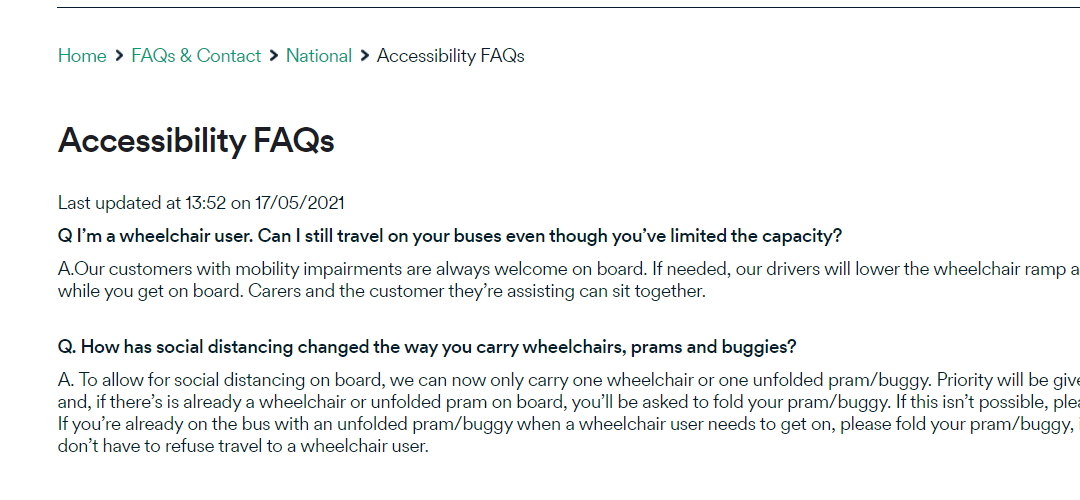
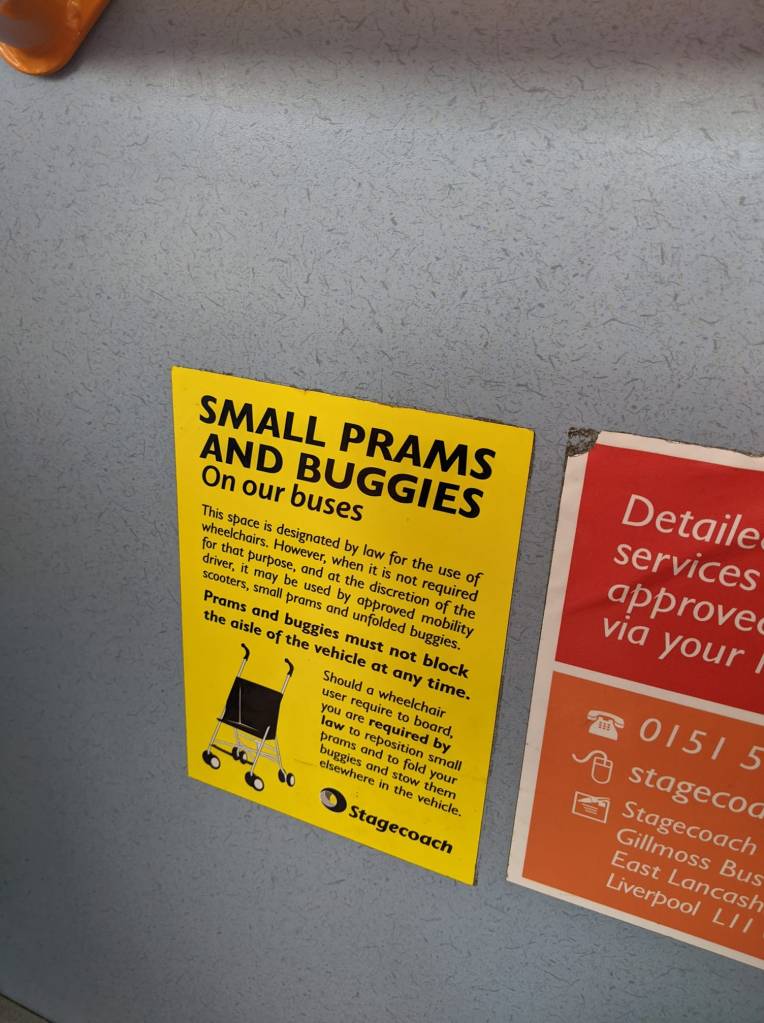
I’m writing you an open letter as one of your disabled service users, and a frequent customer. I’ve had a few issue traveling before but today took the biscuit. Myself and my two young children were using your service to travel home from a hospital appointment. We flagged a Stagecoach bus down first. The driver pulled over, explained that he had already allowed two prams on, one was in the allocated buggy area and the other in the wheelchair space; neither parent wished to fold their pram down or move and off he went. I was more than slightly shocked as this is against your covid-19 policy which is listed on your site. I’ve screenshot it below, along with a picture taken from another of your buses which points out that it is law for a buggy to be moved from the wheelchair space should one need to board. Yet we were left in the rain.*

screenshot taken from stagecoach accessibility facts and question page focusing on wheelchair v prams.
Stagecoach Accessibility FAQS
Sign stating the law that wheelchairs have priority

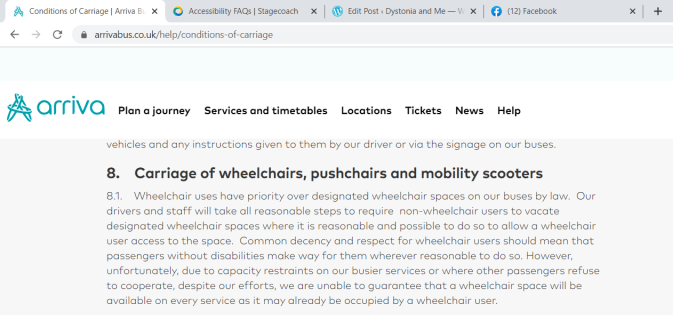
Arriva Bus, it was one of yours that we flagged down next. This time, there was only one pram on board. Inexplicably the parent and pram had placed themselves in the wheelchair area despite the buggy section being free. When your driver asked them to move so we could board, they refused to move and the driver simply shook his head at me said “Sorry, love.” And drove off. This caused quite the stir at the bus stop, with others asking if this was something that happened often. It is quite disappointing to say that this is not the first time that has. Here is a screenshot from your own website Arriva of your policy for wheelchairs and prams.

Arrivas website instruction of priority of wheelchairs over prams
https://www.arrivabus.co.uk/help/conditions-of-carriageArriva Bus Carriage of Wheelchairs and pushchairs

Considering how much time has passed since Doug Paulley first brought his discrimination case to the supreme court back in 2012 over this matter I really expected this issue to be non-existent/on its way out. However experiencing it twice today within a matter of minutes is beyond a joke. How do you explain it to a four year old that two bus drivers didn’t want to follow the law? “Sorry we are not getting that bus either because the driver didn’t want to point out that it’s actually law for her to move over into the pram space. Despite it being his job.” Its disheartening, upsetting, discriminatory and lazy.

I would ask that both companies refresh your drivers memories on your own policies, and on the law. You may have stuck signs inside the buses but that is pointless if you are not going to act on them!

R. McDowall

*I want to acknowledge the kind stagecoach driver who was coming towards the end of a break and witnessed all of this. After waiting a few minutes and realising it was a while before anymore buses going in our direction would be there, cut his break short and drove over to us to let us on. I couldn’t have been more thankful.

Posted in may 2021

Ambulant Wheelchair Users

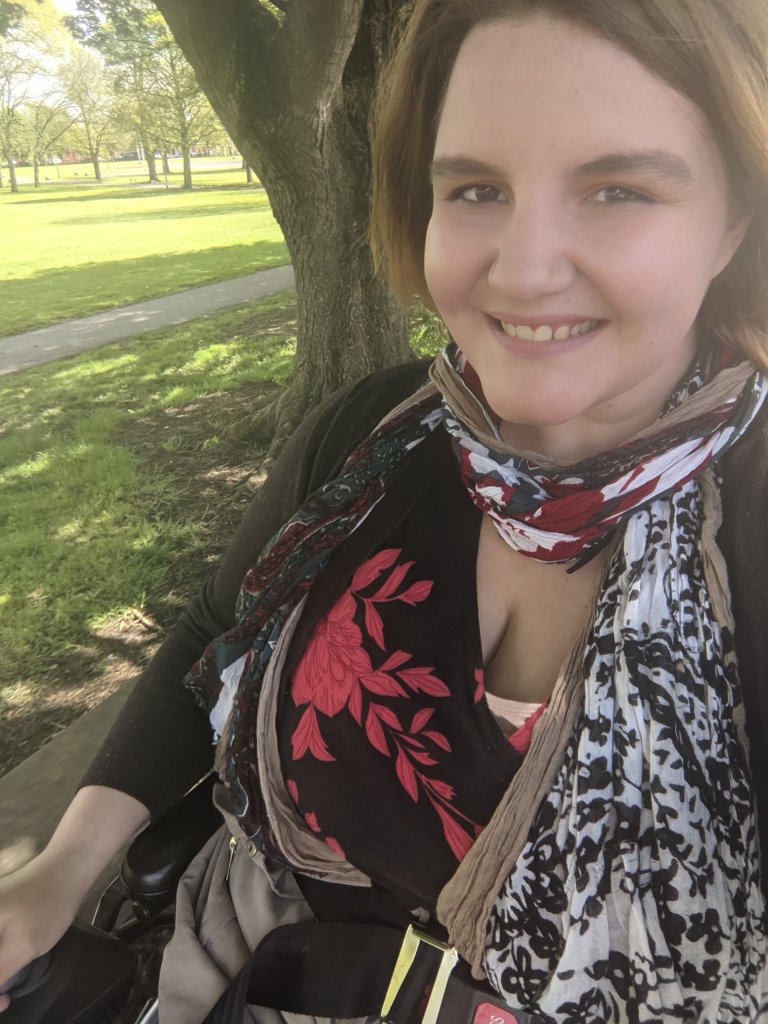
For those who don’t know me personally when they see me coming along me in power chair they naturally presume that I’m wheelchair bound. It’s always an interesting situation when they see me move my legs so I’m more comfortable, or stand up to get in to the house. Sometimes I need the chair full time due to injury or severity of spasms, other times I need it due to length of time we’re out for and my body cannot handle it.

Whilst I’m confident in using it and appreciate how much freedom it provides. I’m not quiet used to the interactions yet with people with nothing nice to say. There’s been a few occasions of people telling me if I lost weight I wouldn’t need the chair, or to stop being lazy and walk. Presumptuous really considering they have no clue why I’m in it but also hurtful. I’ve always been a sensitive soul and I need to learn to toughen up.

I’m currently using my chair full time due to yet another injury thanks to my EDS. I find it odd how many people still are surprised by ambulant chair users. It’s an area that deffinently needs more discussion and awareness. I’ve used wheelchairs on and off for years due to my many conditions, as my EDS has deteriorated the use has increased. It enables me to still function and go about my day to day life independently, something that is very important to me. I couldn’t be more greatful for my chair.

Using my power chair to get home from church.